

World Water Day 2026 is not another event to make people aware of things. It is a warning signal. World Water Day 2026 tells us about something that many people are still not paying attention to: the global water shortage is already affecting billions of people.
If you are wondering whether this really affects your life the answer is simple:
Yes. More than you think.
This is not about the water you drink. It is about the food you eat the job you do your health and your future.
🌐More Information – newzeefy
🔑 Key Highlights
- Over 2 billion people do not have drinking water
- India is facing one of the water stress levels in the world
- The United Nations warns that the global water shortage is getting worse
- Climate change is making water scarcity worse
- Cities could face situations where they run out of water
- The water crisis is increasing the cost of living
- Small daily habits can reduce water waste
💧 What Is World Water Day 2026
Let us not make this more complicated than it needs to be.
World Water Day 2026 is observed on March 22 every year to make people aware of freshwater and sustainable water usage.
It was started by the United Nations in 1993.
But things have changed now:
- Earlier it was about making people aware
- Now it is about urgency and taking action
⚠️ Why this matters now
Because the global water shortage is no longer something that will happen in the future.
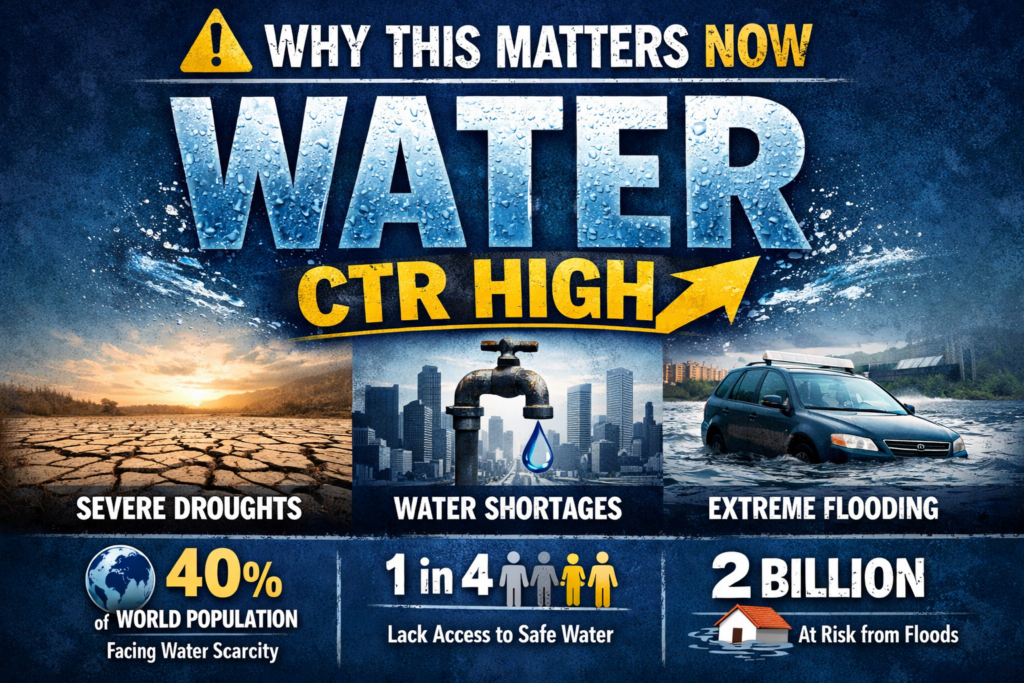
According to the United Nations over 2 billion people still do not have access to managed drinking water.
That is 1 in 4 people around the world.
🌍 Global Water Shortage: What Is Really Happening
When people hear about water shortage they imagine taps that’re dry.
It is more complicated than that.
Global water shortage includes:
- Lack of drinking water
- Water scarcity that happens at certain times of the year
- Groundwater depletion
- Water pollution
Real-world examples:
- Chennai ran out of water in 2019
- Cape Town almost ran out of water
- Parts of Africa are facing droughts that never seem to end
These are warning signs, not cases.
\🇮🇳 Why India Is at the Center of the Water Crisis
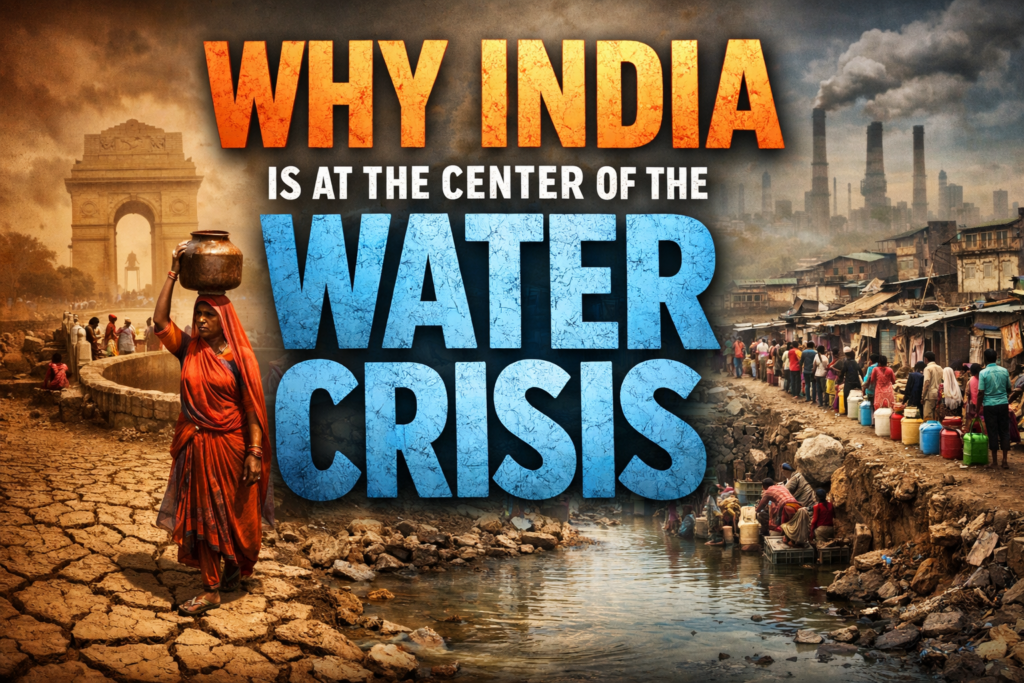
If you are living in India this issue is closer to you than you think.
Key facts from the NITI Aayog report:
| Factor | Data |
|---|---|
| People facing water stress | 600 million Indians |
| Cities at risk | 21 major cities |
| Water contamination | 70 Percent |
What you might already notice:
- Water tankers are becoming more common
- Borewells are running dry
- There are water cuts in apartments
This is the water shortage showing up in your local area.
⚠️ 10 Major Causes of Global Water Shortage
Let us break it down clearly.
- Over-extraction of groundwater: people are pumping out water than nature can replace
- Climate change: rainfall, frequent droughts and reduced freshwater supply
- Population growth: more people means demand for water
- Urbanization: cities are using up water resources
- Water pollution: industrial waste is contaminating water bodies
- Agricultural overuse: about 70 percent of freshwater is used in farming
- Poor water management: leakages and inefficient systems are wasting water
- Deforestation: forests help regulate water cycles
- Demand: factories need large volumes of water
- Lack of awareness: many people still do not realize how serious this issue is
📉 How Global Water Shortage Affects Your Daily Life
You may not notice it directly. It is already affecting you.
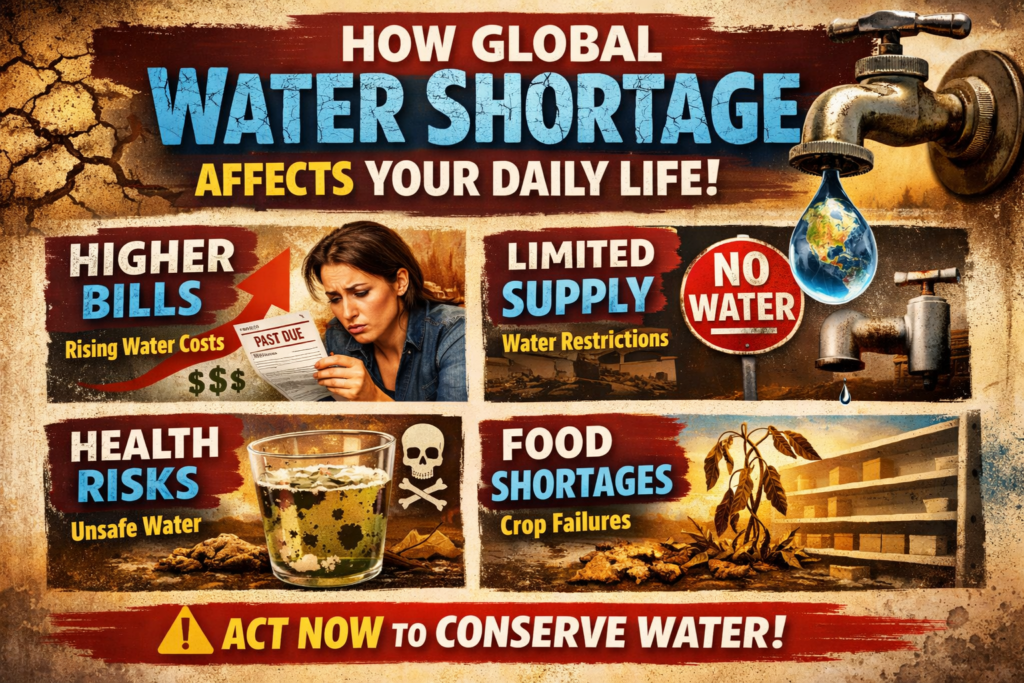
Daily impacts:
- Higher water bills
- Increased food prices
- Energy shortages
- living comfort
Real-life example:
When water becomes scarce farmers produce less food, which means food prices rise and your grocery bill increases.
Simple chain reaction. Big impact.
💼 Career and Future Opportunities
Here is something
While the water crisis creates problems it also creates opportunities.
Growing fields:
- Water resource management
- Environmental engineering
- Climate data analysis
- Sustainability consulting
If you are a student or developer this is your signal to learn skills related to climate tech, data and sustainability.
🧠 Best Practices: How You Can Save Water Daily
Let us keep it practical.
- Fix leaks immediately: even a small leak can waste liters of water every day
- Use water- appliances: it reduces long-term usage
- Rainwater harvesting: it recharges groundwater naturally
- Reuse water: use greywater for plants
- Avoid usage: simple habits matter
🔮 Future Prediction: What Happens If We Ignore This
Let us be honest.
If nothing changes:
- Cities may run out of water
- Food production will drop
- Conflicts over water may rise
- Economic instability may increase
This is not an exaggeration. Experts are already warning us about it.
❓ FAQs: World Water Day 2026
What is World Water Day 2026?
It is an event on March 22 to raise awareness about water conservation and freshwater access.
Why is global water shortage increasing?
It is because of climate change, overuse of water, pollution and population growth.
How serious is the water crisis, in India?
India is facing one of the water stress levels affecting millions of people.
What is groundwater depletion?
It means water is being extracted faster than it can be naturally replenished.
What is Day Zero?
It is when a citys water supply runs out completely.
How can you save water at home?
Fix leaks, reduce wastage reuse water and install systems.
Will water become expensive in the future?
Yes scarcity can increase water costs significantly.
How does water shortage affect food prices?
Less water means crop production, which means higher food prices.
🚀 Conclusion
At glance World Water Day 2026 might seem like just another awareness day.
When you look deeper it is a warning you should not ignore.
The global water shortage is already changing how people live, eat and survive.
You do not need to solve the crisis.
You do need to start small.
Because your daily choices today can make a difference tomorrow.