

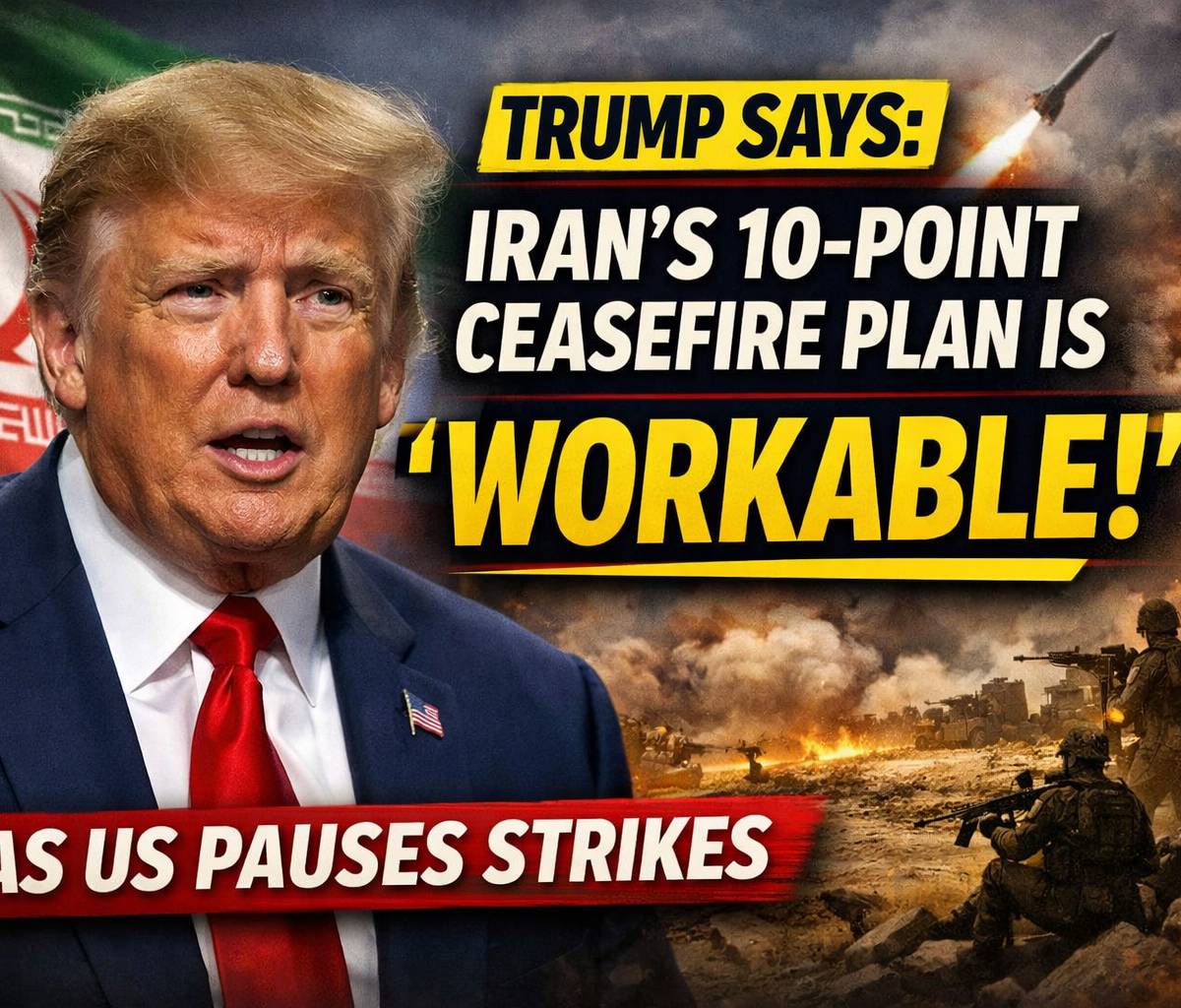
A major Middle East flashpoint may be heading for a brief pause—at least for now. US President Donald Trump says Iran has sent a “workable” 10-point ceasefire proposal, and the US has agreed to a two-week ceasefire that could temporarily cool down a fast-escalating conflict. You can follow ongoing developments like this on Newzeefy.
This update matters for one big reason: the deal is tied to the Strait of Hormuz, a narrow but critical waterway that helps move a huge share of the world’s oil and energy supplies. If shipping there is disrupted, fuel prices everywhere can jump—fast. For more fast-moving headlines, check Trending News – Latest.
Below is a simple, human breakdown of what’s being proposed, what Iran is demanding, what Trump is saying, and what the world will be watching over the next two weeks.
What happened: Trump agrees to a two-week pause
Trump announced that the US would pause military strikes on Iran after accepting a proposed two-week ceasefire. The idea, according to Trump, is to create a short window where both sides can work toward a longer-term peace deal—without more bombs dropping in the background.
What Trump says the ceasefire depends on
In his public comments, Trump strongly linked the pause to a key condition: the “complete, immediate, and safe opening” of the Strait of Hormuz.
In other words, this isn’t just “stop shooting for two weeks.” It’s also about restoring safer movement for global shipping in one of the world’s most sensitive energy corridors.
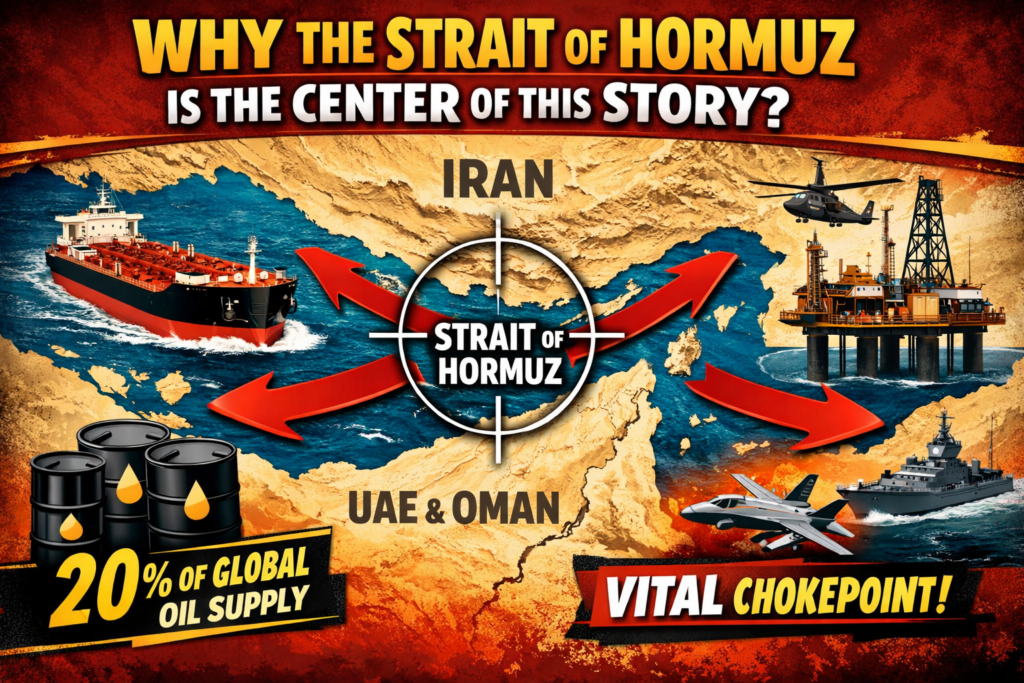
Why the Strait of Hormuz is the center of this story
If you’ve heard the name “Strait of Hormuz” before, it’s usually in the context of oil, tankers, and rising geopolitical tension. That’s because it’s one of the most important maritime choke points on Earth.
A reliable explainer on why it matters for global energy is available via the US Energy Information Administration (EIA) here: Strait of Hormuz and global oil shipments.
Why it matters so much
- A significant share of global oil shipments pass through the strait during normal conditions
- Any disruption can quickly impact:
- global oil prices
- shipping insurance costs
- supply chain timelines
- regional military risk
Because energy shipping and security are deeply connected to modern systems, you can also explore related coverage in Technology News – Latest on Newzeefy.
Trump’s ceasefire framing makes it clear: Hormuz access isn’t a side issue—it’s the main lever.
Iran says it accepts the pause—under conditions
Iran’s foreign minister Abbas Araghchi said Tehran would also halt its operations for two weeks if the US and Israel stop their attacks.
But Iran’s message comes with a major point of emphasis: it says Iranian forces would coordinate passage of vessels during the ceasefire while still insisting Iran maintains control over the strait.
The tone from Tehran: “We forced this”
Iran’s leadership also presented the moment as a win, claiming the conflict ended with the US being pushed toward Iran’s terms. That political framing matters because it affects how flexible each side can be at the negotiating table.
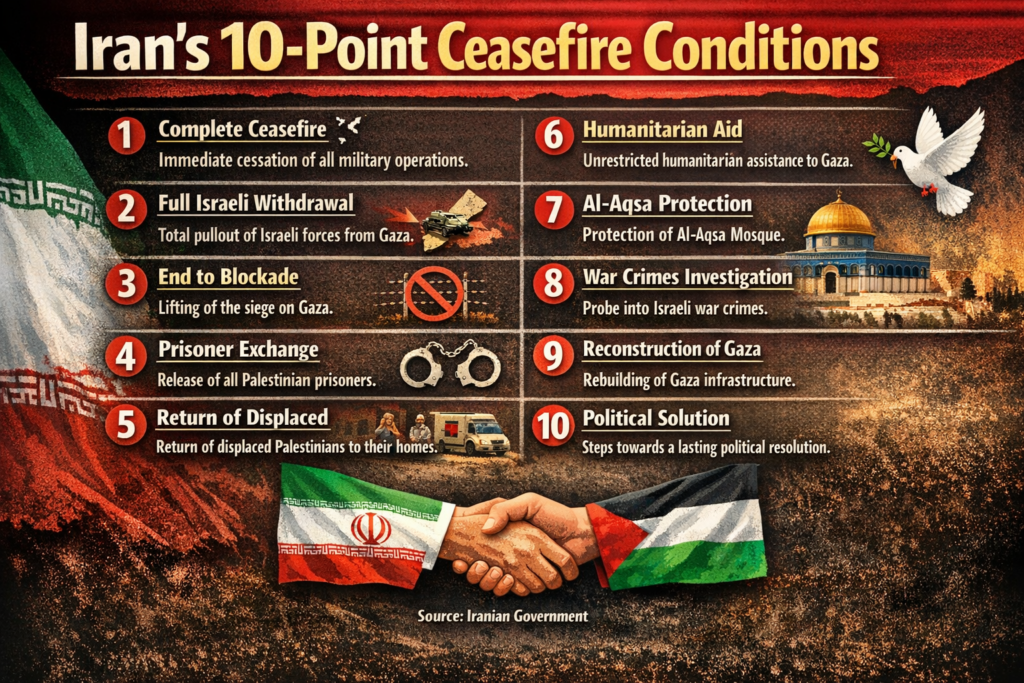
Iran’s 10-point ceasefire conditions (the heart of the proposal)
Iran’s Supreme National Security Council outlined a 10-point blueprint that it says must be part of any ceasefire-and-beyond arrangement.
Here are the conditions, restated clearly:
The 10 points Iran is putting on the table
- Non-aggression
- Continuation of Iran’s control over the Strait of Hormuz
- Acceptance of Iranian nuclear enrichment
- Lifting all primary US sanctions
- Lifting all secondary US sanctions
- Termination of UN Security Council resolutions targeting Iran (as described by Iran)
- Termination of IAEA Board of Governors resolutions (as described by Iran)
- Payment of compensation to Iran
- Withdrawal of US combat forces from the region
- Ending military action on all fronts, including against Iran-aligned forces
For background on the global institutions mentioned in the proposal, these official sources are helpful:
- UN Security Council (official site): https://www.un.org/securitycouncil/
- International Atomic Energy Agency (IAEA): https://www.iaea.org/
This is a sweeping list. Some points focus on immediate military de-escalation, while others aim at long-term political and economic outcomes—especially sanctions relief and recognition of enrichment.
Trump calls the plan “workable”—what that likely means
Trump said Iran’s proposal is a “workable basis” for negotiation. He also suggested that the US has already achieved its military objectives and sees a path toward a broader peace arrangement.
Why Trump may be open to a temporary ceasefire
From Trump’s perspective, a two-week pause can achieve several goals at once:
- Stops immediate escalation and reduces the risk of a wider war
- Protects global energy flows, especially through Hormuz
- Creates negotiating space to test Iran’s seriousness
- Buys time for diplomatic and military recalibration
He also indicated that many major points of contention have been “almost” resolved—though he did not publicly detail which ones.
Pakistan’s role: a key backchannel in the middle
One of the most interesting parts of the story is how Pakistan is described as a mediator. Trump referenced conversations with Pakistan’s leadership and said they requested that he hold back imminent military action—provided Iran agrees to open Hormuz safely.
Why Pakistan’s involvement matters
Pakistan can act as:
- a regional intermediary with working relationships on multiple sides
- a messaging bridge when direct communication is politically difficult
- a de-escalation channel that helps prevent miscalculations
Even if Pakistan isn’t writing the final deal, helping both sides step back from the edge can be hugely significant.
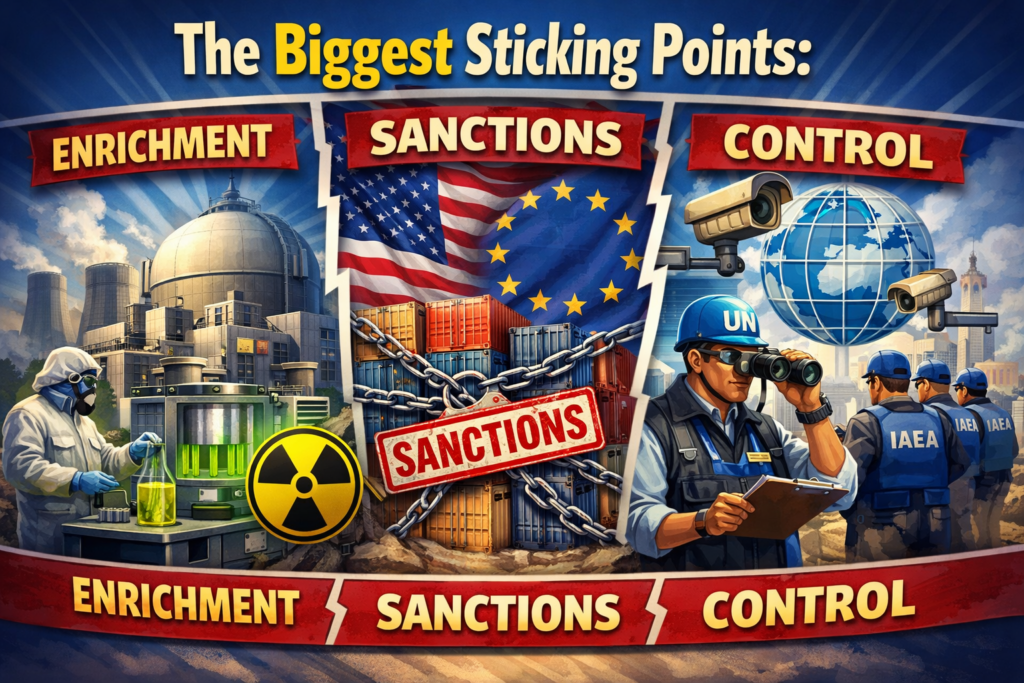
The biggest sticking points: enrichment, sanctions, and “control”
If you read Iran’s list, three categories jump out as the hardest to reconcile.
1) Nuclear enrichment
Iran demands acceptance of enrichment. The US position historically has been more restrictive, often focusing on limits, verification, and enforcement mechanisms.
Key question: What level of enrichment is being discussed—and who verifies it?
(Verification debates often point back to oversight bodies like the IAEA: https://www.iaea.org/.)
2) Sanctions relief (primary and secondary)
Iran wants all primary and secondary sanctions lifted, which is massive because secondary sanctions can affect third countries and global companies doing business with Iran.
Key question: Would relief be immediate, phased, or tied to compliance milestones?
3) Strait of Hormuz: “open it” vs “control it”
Trump’s condition stresses safe opening of Hormuz. Iran’s condition stresses Iranian control. Those phrases can collide.
Key question: Can shipping be guaranteed without either side feeling it “lost” control?
For broader maritime safety standards and shipping governance, see the International Maritime Organization (IMO): https://www.imo.org/
What could happen in the next two weeks
Two-week ceasefires are often fragile. They can lead to real progress—or just reset the battlefield and messaging.
What “success” could look like
- No attacks by either side during the pause
- A clear, verifiable mechanism for safer maritime passage
- A roadmap for talks on sanctions, enrichment, and regional force posture
- Backchannel diplomacy turning into formal negotiations
What could derail the ceasefire quickly
- A single incident in Hormuz involving a tanker, drone, or patrol craft
- Disagreement on what “halt attacks” actually includes
- Domestic political pressure on either side
- Conflicting interpretations of “control” of the strait
This is why the next two weeks are less about headlines and more about execution.
Why this matters beyond the region (yes, even if you live far away)
Even if you’re nowhere near the Middle East, this story can still hit your daily life—especially through energy and markets.
Global ripple effects to watch
- Oil and gas prices: any threat to Hormuz can move markets quickly
- Shipping delays: rerouting and risk premiums can increase costs
- Geopolitical risk: escalation can pull in allies and neighboring states
- Investor uncertainty: markets dislike unpredictability more than bad news
This is also where modern tools—satellite tracking, automated risk scoring, and data modeling—play a growing role. If you like that angle, browse AI News – Latest.
Conclusion: Trump’s “workable” moment is a pause, not a finish line
Trump describing Iran’s 10-point ceasefire plan as “workable” signals a real opening—but it’s still just that: an opening. A two-week ceasefire can reduce immediate danger, yet the hardest issues remain unresolved: sanctions, nuclear enrichment, regional military posture, and who truly controls access through the Strait of Hormuz.
If the ceasefire holds and shipping stabilizes, this could become the start of a broader negotiation track. If it collapses, the region could return to escalation even faster than before—especially with so much symbolism and strategic value attached to Hormuz.
To keep up with updates, visit Trending News – Latest. And if you’re exploring career moves while following global events, you can also check Latest Jobs on Newzeefy.
FAQs
What is Trump’s position on Iran’s ceasefire proposal?
Trump said Iran’s 10-point proposal is “workable” and agreed to a two-week ceasefire, tied to the safe opening of the Strait of Hormuz.
Why is the Strait of Hormuz so important in this ceasefire?
Because a large share of global energy shipments move through it. If Hormuz is blocked or unsafe, oil prices and global shipping costs can spike.
What are Iran’s main demands in the 10-point plan?
Iran’s biggest demands include sanctions relief, acceptance of nuclear enrichment, and continued Iranian control over the Strait of Hormuz, along with regional military changes.
Did Iran agree to stop military operations?
Iran said it would pause for two weeks if the US and Israel halt attacks, describing its actions as defensive and linked to ceasefire compliance.
What happens after the two-week ceasefire ends?
If talks progress, the pause could lead to a longer agreement. If not, military operations could resume—especially if there’s a dispute over Hormuz access, sanctions, or enforcement terms.