

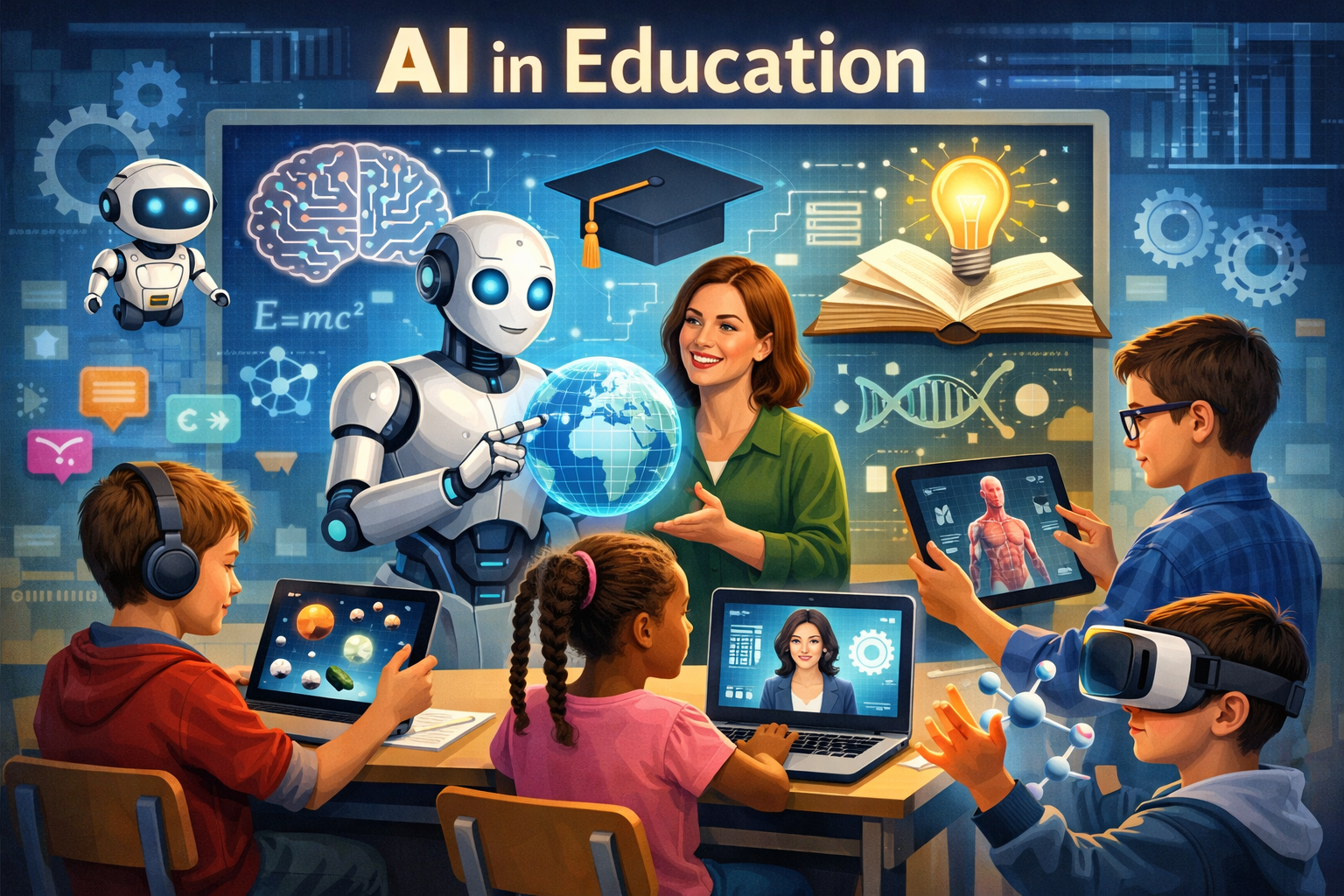
AI in Education is rapidly transforming how student learn, teachers teach, and institutions operate. AI in Education is no longer a futuristic concept; it’s already a reality. You may be a student, a teacher, or a parent, and you may already be witnessing this change with the help of artificial intelligence in education, as learning has become intelligent, efficient, and effective enough to cater to the needs of each and every learner.
Not only can assignments be collected in real-time, but learning plans can be adjusted based on the ability to learn for each learner, and many such tools are available to provide instant answers to complex questions.
However, this change has brought along a number of questions to be answered. Here are a few questions that need to be addressed:
How does this improve learning with the help of artificial intelligence in education?
Will this replace teachers with the help of artificial intelligence in education?
What are the skills that need to be learned with the help of artificial intelligence in education?
Let’s learn more about this with the help of this guide on artificial intelligence in education.
For more insights on technology and innovation, you can explore helpful resources on
🔑 Key Highlights
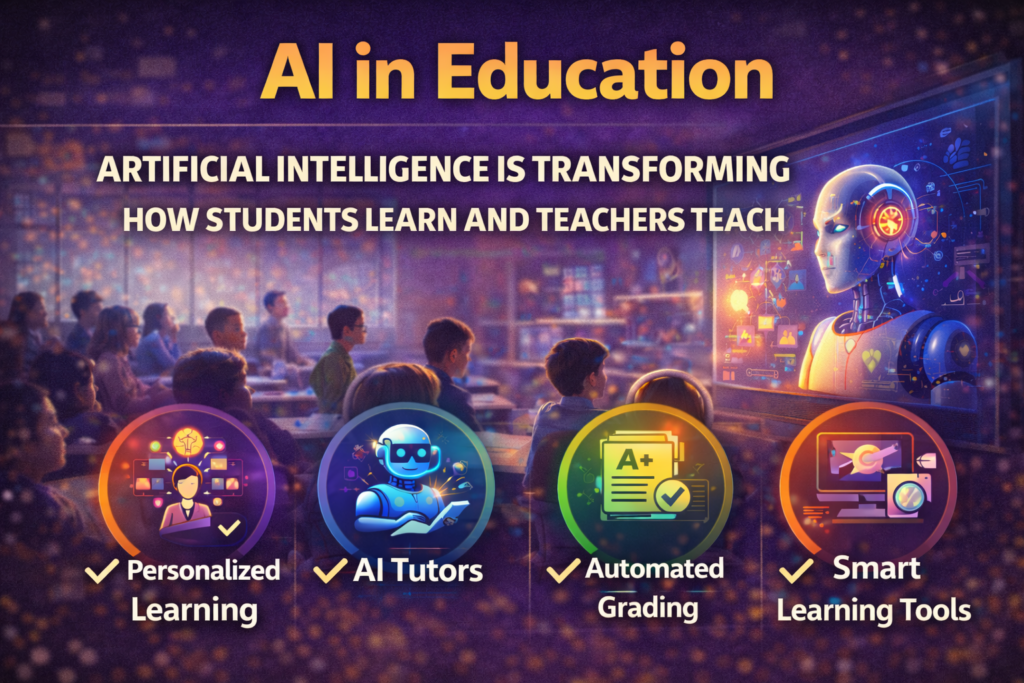
- AI in Education enables the personalization of the student experience
- AI tools assist with research, writing, and studying more efficiently
- Teachers use AI to automate grading and other tasks
- Educational platforms use AI to recommend resources to students
- AI tutors assist with explanations and feedback
- Artificial intelligence in the field of education is expected to expand significantly by 2030
Why AI in Education Matters Today
Every educational sector across the globe is experiencing challenges.
Students have a varying rate of learning. A teacher is often required to handle many students in a very large class. Thus, there may be no use of friendly educational tools.
This is where the role of Artificial Intelligence is important.
According to reports from the World Economic Forum regarding the performance of Artificial Intelligence in the field of educational technology, it is capable of improving the learning of students.
Instead of the traditional way of educating students, where one type of knowledge is imparted to all, Artificial Intelligence is capable of adapting to individual needs.
Thus, the benefits of Artificial Intelligence include:
- Learning at a faster rate
- Personalized feedback
- Understanding complex ideas
1. Personalized Learning for Every Student 🎓
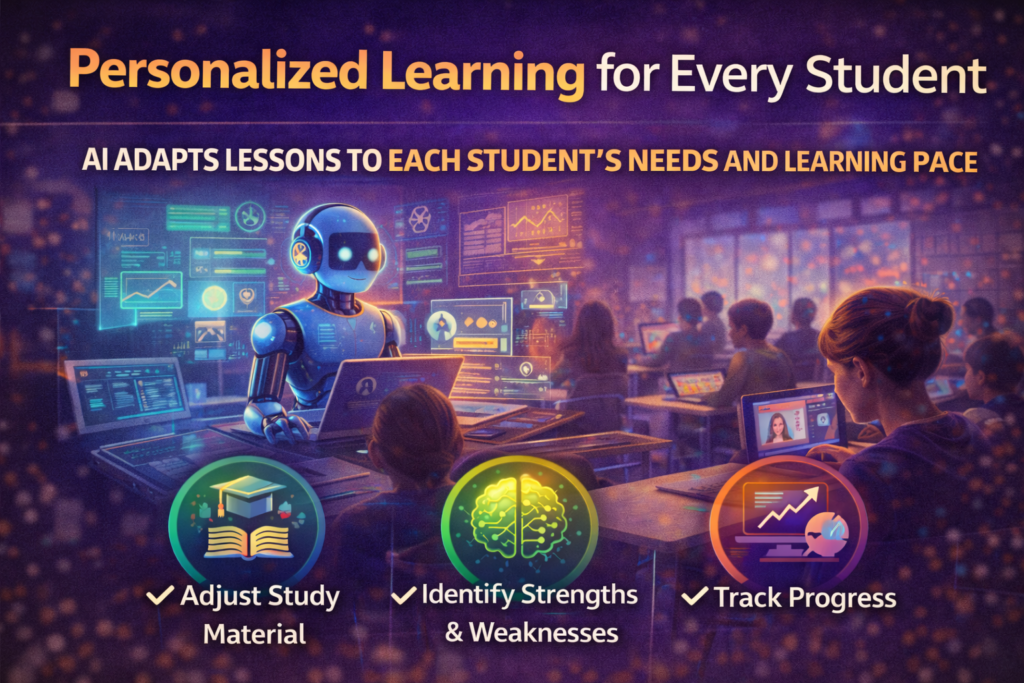
One of the most powerful benefits of AI in Education is Personalized Learning.
The AI system studies how students interact with educational content.
It can monitor:
- the speed of learning
- errors
- weaknesses
- learning style
Real Example
- Learning platforms are increasingly using AI to make recommendations.
- If a student has difficulty with algebra, it can suggest practice problems or simpler explanations.
- This type of learning has been proven to greatly improve understanding.
2. AI-Powered Study Assistants
AI tools are proving to be useful learning companions for the students.
The role of AI assistants, such as ChatGPT and Google Gemini, for the students includes:
- Explanation of complex concepts
- Summing up the content of textbooks
- Preparation of notes
- Answering questions for research
The AI assistant saves the students the trouble of going through the textbooks and provides answers to their queries.
However, the AI assistant must be used as a learning aid and not as a substitute for the assignments.
3. Automated Grading for Teachers
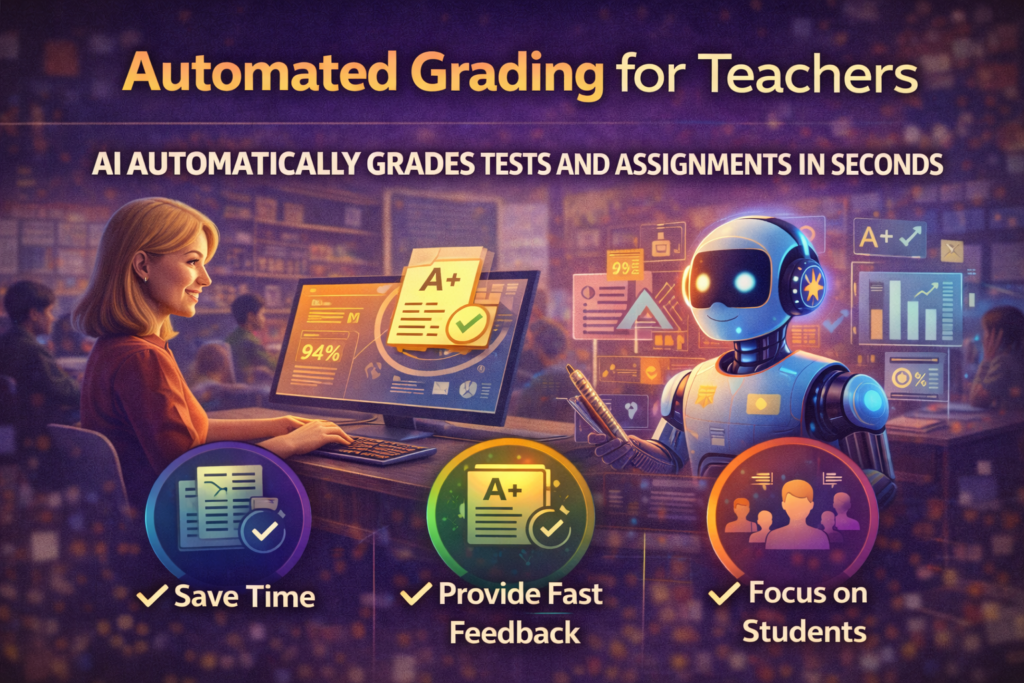
Teachers spend a significant amount of time grading.
This can be reduced using artificial intelligence.
Teachers can use an AI grading system to grade:
- multiple choice tests
- short answers
- essays
- coding
This helps them save time.
Teachers can then use their time to mentor and enhance student engagement.
4. Intelligent Tutoring Systems
Tutors using AI technology are becoming more advanced.
The benefits of AI tutoring systems include:
- Instant feedback
- Step-by-step explanations
- Interactive exercises
For instance, AI tutoring systems enable students to solve their math problems step by step.
The student receives immediate feedback if they have made a mistake.
The interactive learning process enables the student to improve their faster.
5. AI for Language Learning
- Learning languages is one area where AI is making a huge impact in the field of education.
- Language learning tools use AI to evaluate the pronunciation and grammar of the student.
- Students receive real-time corrections and suggestions.
- Some of the most popular tools use AI along with speech recognition technology.
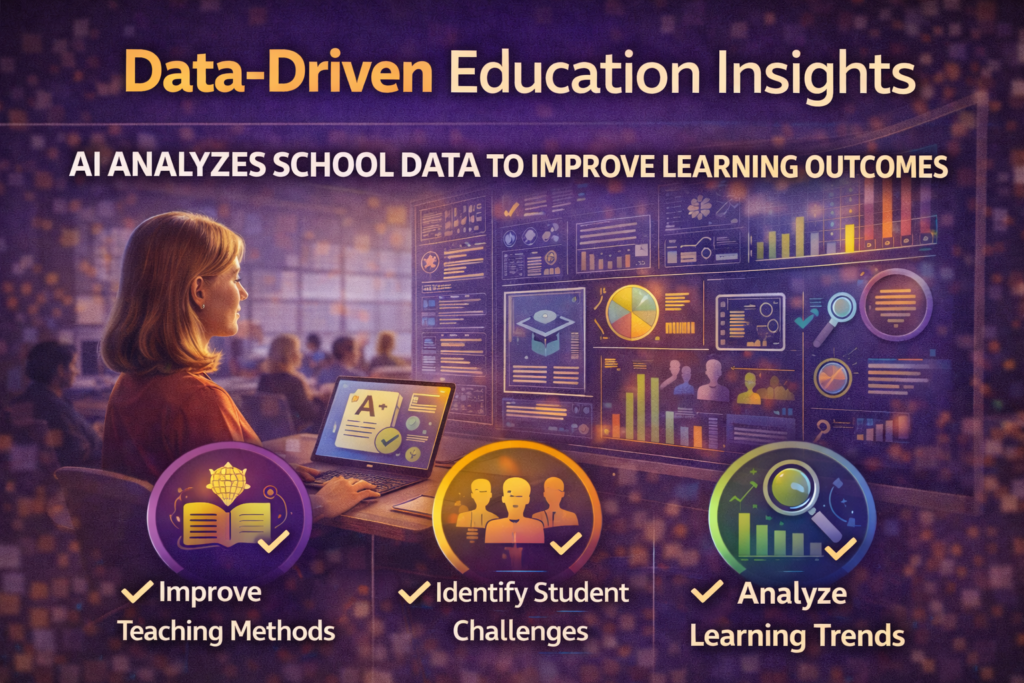
6. Data-Driven Education Insights
Educational institutions receive vast amounts of learning data.
AI is able to analyze this data to identify trends.
- Subjects that students struggle with the most
- Methods that are the most effective
How the outcomes vary among demographics
7. AI and Online Learning Platforms
Online learning platforms have shown tremendous growth over the past few years.
Companies like Coursera and Khan Academy use AI technology to personalize the learning process.
AI technology is used to recommend courses based on:
- Learning history
- Career goals
- Performance of previous lessons
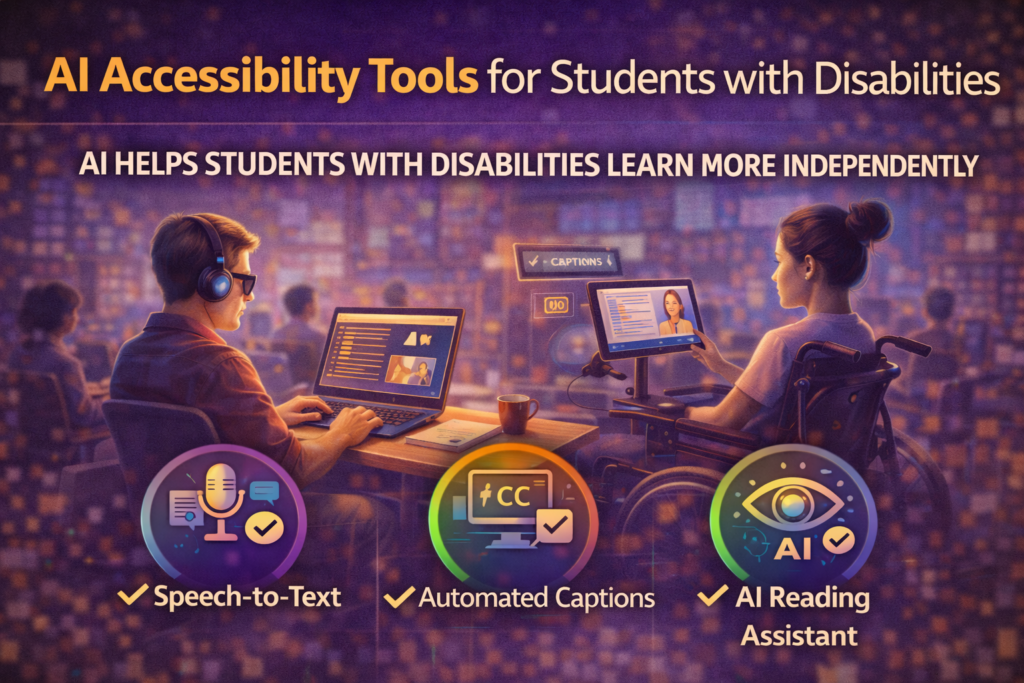
8. AI Accessibility Tools for Students with Disabilities
AI technology will also support increased Accessibility to various services.
AI will enable students with disabilities to use various assistive technologies such as;
- Speech Recognition Software;
- Captioned Video;
- Read-Aloud Services;
- Visual Recognition;
These technologies will assist all learners to access education.
9. Preparing Students for Future Careers
Students entering the workforce in the next decade will likely work with AI every day.
Understanding Artificial intelligence in education prepares students for careers in:
- data science
- artificial intelligence
- cybersecurity
- robotics
- software development
Students will need to know how to work with AI systems, which will become an important skill.
10. The Future of AI in Education
The use of AI in education will continue to grow.
The future possibilities include:
- AI personal tutors
- Virtual reality classrooms
- Intelligent course suggestions
- Automated curriculum creation
The future prediction for the global AI education market is over $20 billion by 2027.
This illustrates the tremendous pace at which educational technology is advancing.
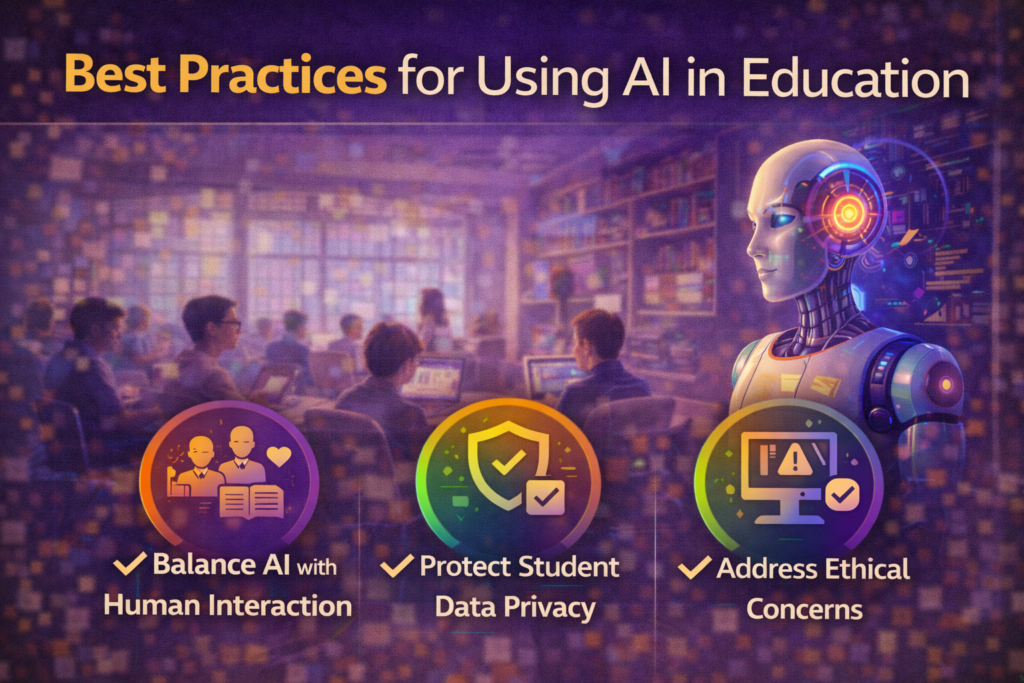
Best Practices for Using AI in Education
However, AI can be incredibly helpful when used responsibly.
Use AI as a Learning Assistant
Students should use AI to better understand the topic, not to produce the answer.
Verify the Information
At times, the information provided by the AI is incorrect.
It is always important to verify the information from credible sources.
Use Both Human Learning and AI Tools
The best results are obtained from the combination of human creativity and AI tools.
Internal Resources on Newzeefy
You can explore more technology insights on Newzeefy:
These resources provide deeper insights into technology, innovation, and digital transformation.
Challenges of AI in Education
However, there are also challenges associated with AI.
Ethical Concerns
It is important to ensure that AI systems do not compromise privacy.
Over-reliance on AI
It is important to encourage critical thinking in students.
Technology Access
Not all students may have access to technology.
Final Thoughts
Education is an evolving concept.
Artificial intelligence is not replacing the teacher or the student—it’s enhancing the learning experience.
When used correctly, AI in Education can make learning more personalized, accessible, and effective.
Students who learn how to use AI correctly will give themselves a tremendous advantage in their future profession.
For more technology insights and educational trends, visit newzeefy
Frequently Asked Questions (FAQ)
What is AI in education?
The term “AI in education” refers to the use of artificial intelligence tools to enhance learning and teaching. These tools assist learners in understanding complex concepts, personalizing learning content, and automating learning activities.
How is artificial intelligence used in education?
The application of artificial intelligence in the field of education encompasses various functions, for instance, the use of personalized learning platforms, AI tutors, automated grading systems, and intelligent study assistants, to name a few.
What are the benefits of AI in education?
AI in education include personalized learning experiences, faster feedback for students, improved accessibility for learners, & reduced administrative workload for teachers.
Can AI replace teachers in the future?
AI is designed to assist teachers rather than replace them. Teachers provide guidance, emotional support, & mentorship, while AI tools help automate repetitive tasks & improve learning efficiency.
What AI tools are commonly used by students?
Popular AI tools used by students include ChatGPT, Google Gemini, Grammarly, Notion AI, and QuillBot. These tool help student with research, writing, note-taking, and study planning.