

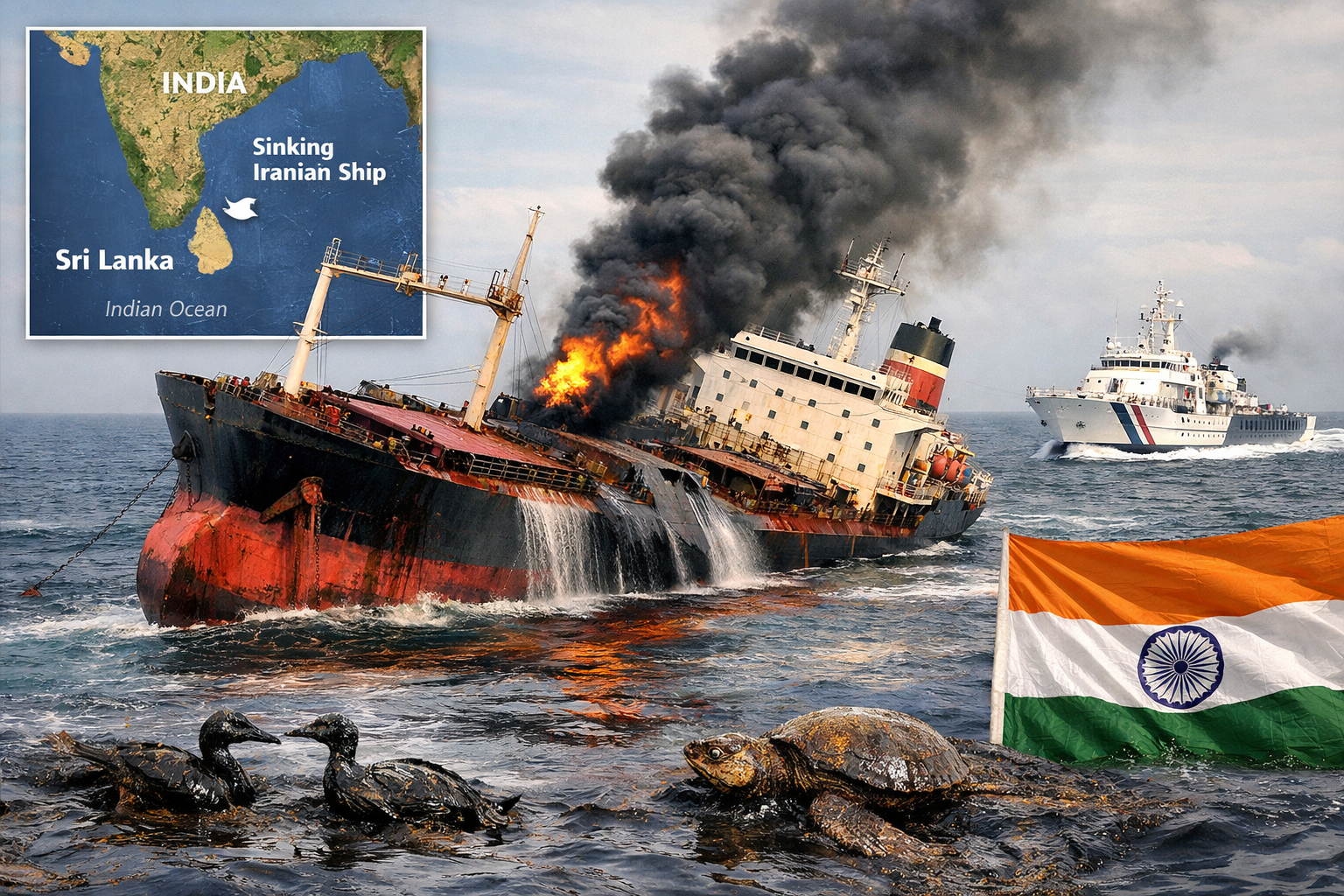
A sinking Iranian ship near Sri Lanka has become a topic of concern for several countries in the Indian Ocean region, especially India. The waters around Sri Lanka are part of one of the busiest international shipping routes in the world, and any accident involving a large cargo vessel can quickly become a major environmental and strategic issue.
When a ship begins to sink, especially if it carries fuel, chemicals, or hazardous cargo, the situation can escalate into oil spills, marine pollution, and maritime security concerns. Because India is geographically very close to Sri Lanka, such incidents can directly affect its coastal regions.
Explanation of the Situation
Ships traveling through the Indian Ocean shipping corridor transport large quantities of goods every day. These cargo vessels often carry:
- Crude oil
- Industrial chemicals
- Fuel used by ships
- Containerized goods
If a ship starts sinking due to technical failure, collision, fire, or extreme weather, the cargo and fuel inside can leak into the ocean.
Why Location Matters
Sri Lanka sits near major sea routes connecting:
- Asia
- Europe
- Middle East
- Africa
Because of this strategic position, any maritime accident in this region can affect multiple countries, particularly India’s southern coastline.
For more updates on global events and trending news topics, readers can explore trusted sources like https://newzeefy.com/ for additional insights.
Step-by-Step Explanation of the Possible Impact
1. Ship Damage or Mechanical Failure
The incident may start due to:
- Engine failure
- Hull damage
- Fire on board
- Collision with another vessel
When a ship is severely damaged, it may begin to take in water and lose stability.
2. Risk of Oil or Chemical Leakage
Most large ships carry heavy fuel oil for operations. If the ship sinks, this fuel can leak into the ocean.
Possible consequences include:
- Marine pollution
- Damage to coral reefs
- Toxic impact on marine life
3. Ocean Currents Spread Pollution
Ocean currents near Sri Lanka can quickly move pollutants toward nearby regions.
Potentially affected areas include:
- Southern India
- Tamil Nadu coastline
- Kerala coastal waters
- Parts of the Bay of Bengal
This makes the situation a regional environmental threat rather than just a local accident.
4. Impact on Fishing and Coastal Communities
Many people along the Indian coast depend on fishing for their livelihood.
If pollution spreads:
- Fish populations may decline
- Fishing activities may be restricted
- Coastal tourism may be affected
This can cause economic losses for local communities.
5. Strategic Maritime Concerns
India closely monitors incidents in the Indian Ocean region.
In situations like this, authorities may:
- Deploy Indian Navy or Coast Guard vessels
- Monitor the spread of pollution
- Coordinate with Sri Lankan authorities
- Provide emergency assistance
Such cooperation helps prevent a large-scale environmental disaster.