

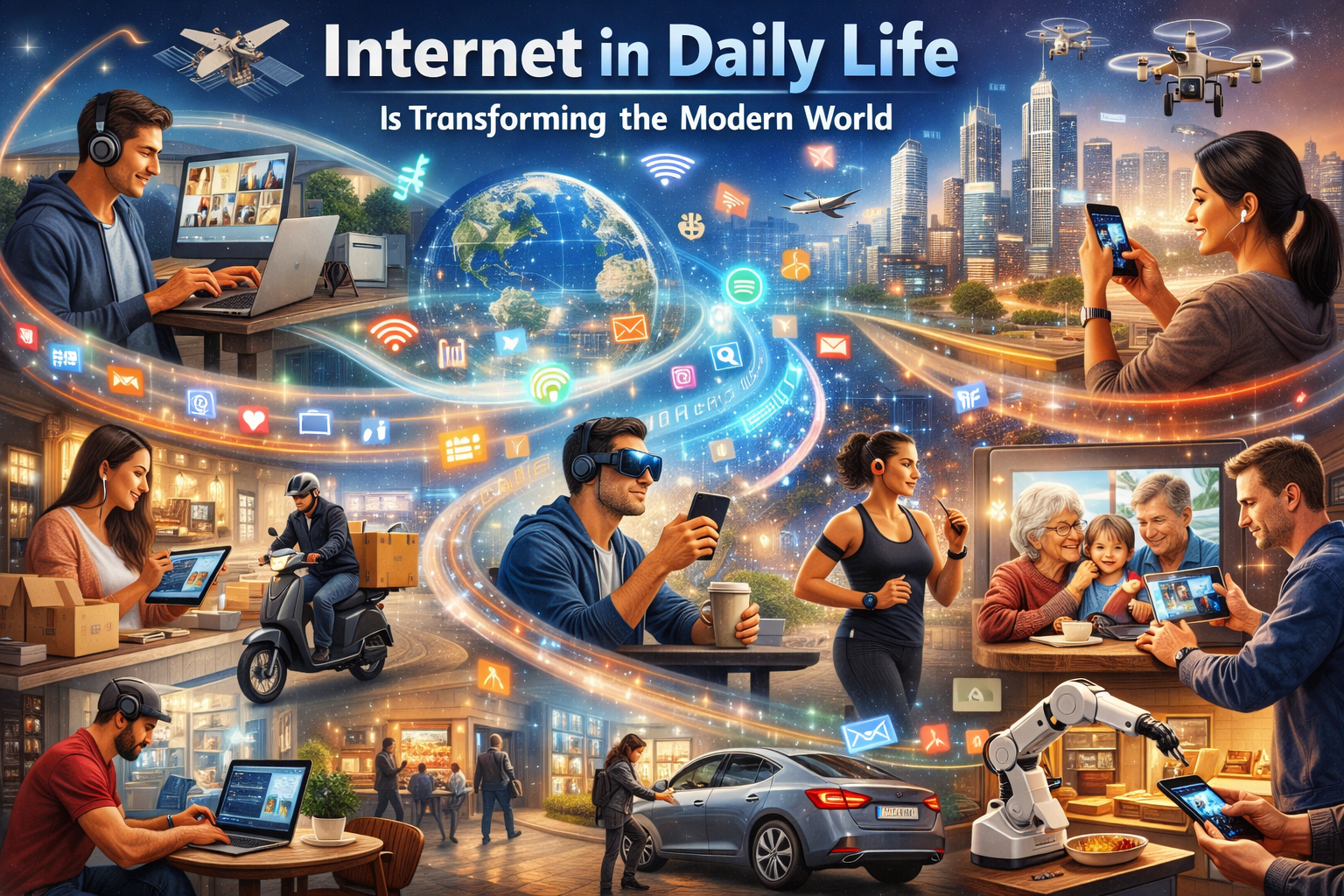
In today’s world, the Internet has become an essential aspect of our lives. Every day, from the time we wake up when we check our emails until we go to bed when we order take-out food. Almost every single action we do is somehow powered by the Internet.
Simply put, the Internet is a means of connecting to the internet and using it to communicate, learn, work, shop and entertain. It connects people to businesses and other people to information around the globe, instantly.
If you take a moment and think about your daily routine, you will see that the Internet is present throughout your day. It’s on your smartphone, all of your work tools, your banking transactions and even in your health apps.
The question is no longer “Do people use the internet?”
The real question is “How deeply does it shape everyday life?”
🔑 Key Highlights
- Over 5.35 billion people use the internet worldwide (DataReportal Global Report).
- Nearly 67% of the global population is now connected to the internet.
- The internet powers communication, education, healthcare, banking, and entertainment.
- Internet technology trends like cloud computing, AI, and smart devices continue to reshape modern life.
- Businesses, students, and professionals rely on the internet every day for productivity and growth.
For more technology insights and trending topics, explore the Technology section on Newzeefy
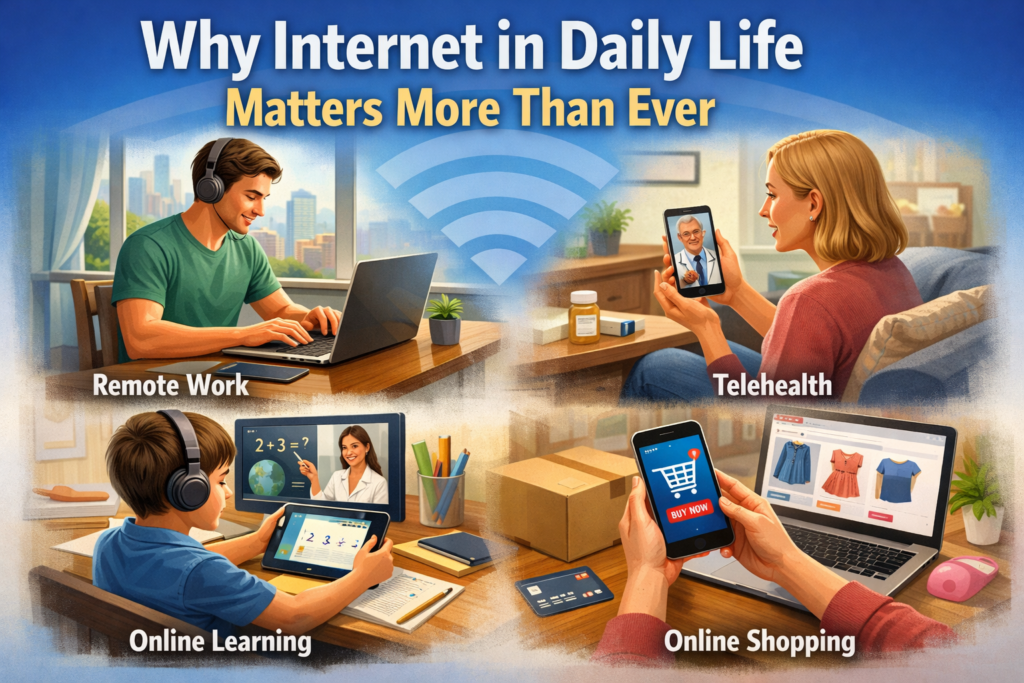
Why Internet in Daily Life Matters More Than Ever
A decade ago, many tasks required physical effort—visiting banks, attending classrooms, or shopping in stores.
Today, most of those activities happen online.
The internet acts as a global information highway, allowing you to:
- Send messages instantly
- Access unlimited knowledge
- Run businesses remotely
- Work from anywhere
According to Pew Research Center, internet connectivity significantly improves education access, job opportunities, and economic development.
Simply put, the internet has become the backbone of modern society.
1. Communication Became Instant and Global 🌍
Before the internet, communication often took hours or days.
Today, messages travel across the world in seconds.
Popular tools that demonstrate Internet in Daily Life include:
- Messaging apps
- Video calls
- Social media platforms
Real-world example
Professionals now attend international meetings through video conferencing without traveling.
Students collaborate with classmates online even if they live in different cities.
This instant connectivity helps both businesses and individuals stay productive.
2. Online Education and Learning Opportunities
Education has transformed dramatically because of the internet.
Students no longer rely only on textbooks or classrooms.
Instead, they can learn from:
- Online courses
- Educational videos
- Virtual classrooms
- Research databases
Platforms like Coursera and Khan Academy offer courses from top universities worldwide.
This shift allows students to learn at their own pace and access global knowledge.
👉 You can explore more educational insights on Newzeefy
3. The Internet Revolutionized Business
Modern businesses rely heavily on the internet.
Companies use online tools to manage operations, marketing, and customer relationships.
Some key uses include:
- E-commerce platforms
- Online advertising
- Digital payments
- Remote collaboration tools
Small businesses especially benefit from internet accessibility.
A local shop owner can now sell products globally through an online store.
👉 For business and digital trends, visit: Newzeefly
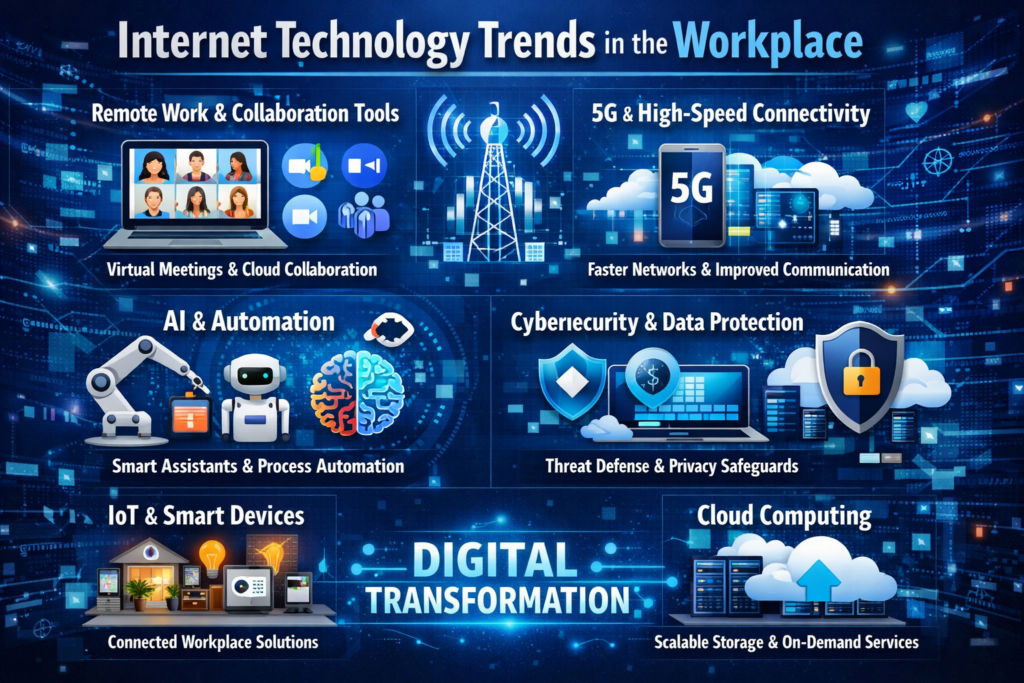
4. Internet Technology Trends in the Workplace
Workplaces have evolved rapidly thanks to internet technology trends.
Remote work has become common in many industries.
Employees now collaborate using tools like:
- Cloud storage platforms
- Project management software
- Virtual meeting platforms
These technologies allow companies to hire talent from anywhere in the world.
This shift has also created new careers in:
- Software development
- Digital marketing
- Data analysis
- Cybersecurity
5. Online Banking and Digital Payments
Financial services changed dramatically with internet access.
Instead of visiting a bank branch, you can now:
- Transfer money instantly
- Pay bills online
- Manage investments
- Monitor financial accounts
Digital payment systems like online banking apps provide convenience and security.
This transformation helps both individuals and businesses manage finances efficiently.
6. Entertainment Became On-Demand 🎬
Entertainment habits changed dramatically because of the internet.
People no longer wait for scheduled TV broadcasts.
Instead, they stream content instantly.
Examples include:
- Movies and TV shows
- Music streaming
- Online gaming
- Podcasts
Platforms such as YouTube and streaming services have completely reshaped entertainment consumption.
7. Healthcare Services Became Accessible
Healthcare is another area where Internet in Daily Life makes a huge difference.
Telemedicine allows patients to consult doctors online.
Health apps also help people monitor:
- Heart rate
- Sleep patterns
- Physical activity
Patients can also access medical information quickly and schedule appointments online.
This digital healthcare approach improves convenience and accessibility.
8. Smart Homes and Connected Devices
Smart technology is one of the fastest-growing internet technology trends.
Devices connected to the internet can automate daily tasks.
Examples include:
- Smart lights
- Voice assistants
- Smart thermostats
- Home security cameras
These devices create smarter and more efficient living environments.
9. Social Media Changed How People Connect
Social media platforms play a major role in Internet in Daily Life.
They allow people to:
- Share experiences
- Connect with friends
- Follow global news
- Build personal brands
However, experts also recommend balancing online and offline interactions.
Healthy digital habits are important.
10. The Future of Internet in Daily Life
The future promises even more innovation.
Upcoming internet technology trends include:
- Faster global internet speeds
- Smart cities powered by connected systems
- AI-powered digital assistants
- Advanced virtual reality experiences
- Improved cybersecurity technologies
As these technologies evolve, internet usage will become even more integrated into daily activities.
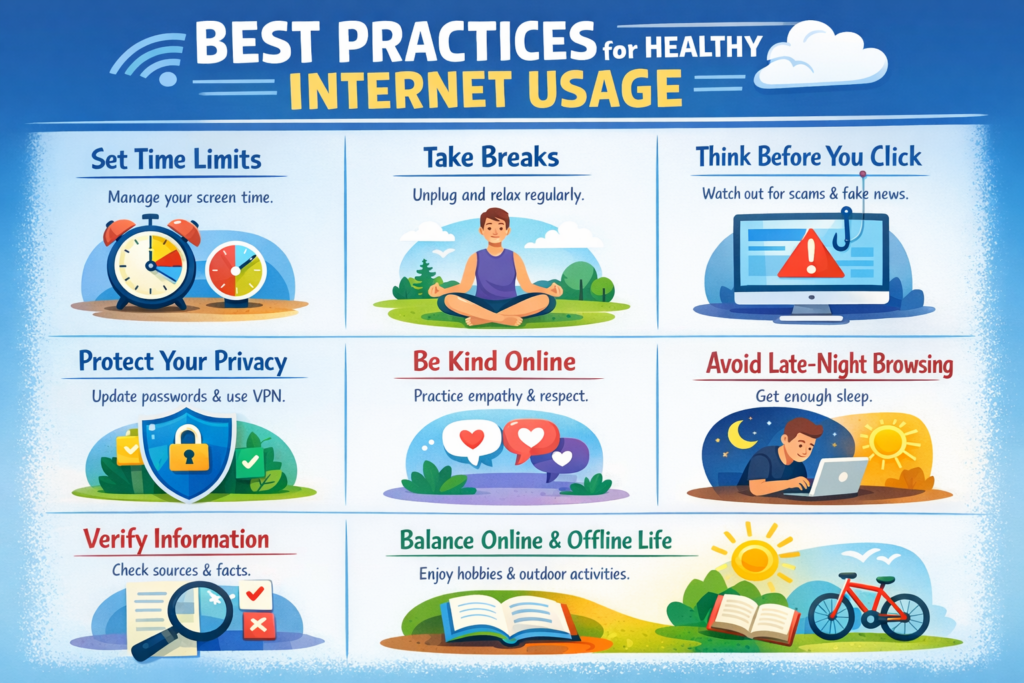
Best Practices for Healthy Internet Usage
While the internet offers many benefits, using it responsibly is important.
Here are practical tips:
- Set time limits for social media
- Protect personal information online
- Use strong passwords
- Avoid unreliable information sources
Balanced internet use helps maintain productivity and mental wellbeing.
Real Career Opportunities Created by the Internet
The internet has also created entirely new career paths.
Some high-demand digital jobs include:
- Web developers
- Digital marketers
- Content creators
- Cybersecurity specialists
- Data analysts
These roles did not exist at this scale two decades ago.
Today, many professionals build entire careers online.
Conclusion
As technology from the Internet continues to evolve and transform how individuals connect and engage with others in society (i.e., family, friends, colleagues), it is anticipated that ongoing advancements in connected devices will result in a higher degree of impact from connected devices on our daily lives.
Understanding how the Internet impacts our daily life through the way we work, learn, communicate and entertain ourselves is vital for businesses and individuals to adjust to the ongoing evolution of the digital world.
For more insights on technology, business, and digital trends, explore Newzeefy
FAQ
What is the role of the internet in daily life?
The internet helps people communicate, learn, work, shop, and access information quickly.
Why is the internet important today?
The internet connects people globally, supports businesses, and provides access to knowledge and services.
How does the internet affect education?
Students can access online courses, digital resources, and virtual classrooms through the internet.
What are future internet technology trends?
Future trends include smart devices, faster internet speeds, AI-powered services, and advanced cybersecurity systems.