

AI in Business 2026 is no longer just a futuristic idea. Businesses across the world already rely on artificial intelligence to automate tasks, analyze data, and make smarter decisions faster than ever before.
In simple terms, AI in Business 2026 means companies using intelligent software to improve productivity, reduce costs, and create better customer experiences.
If you run a business, work in tech, or plan a career in digital industries, understanding how AI is changing business operations can give you a major advantage.
👉 For more technology and business insights, explore the latest articles on
🔑 Key Highlights
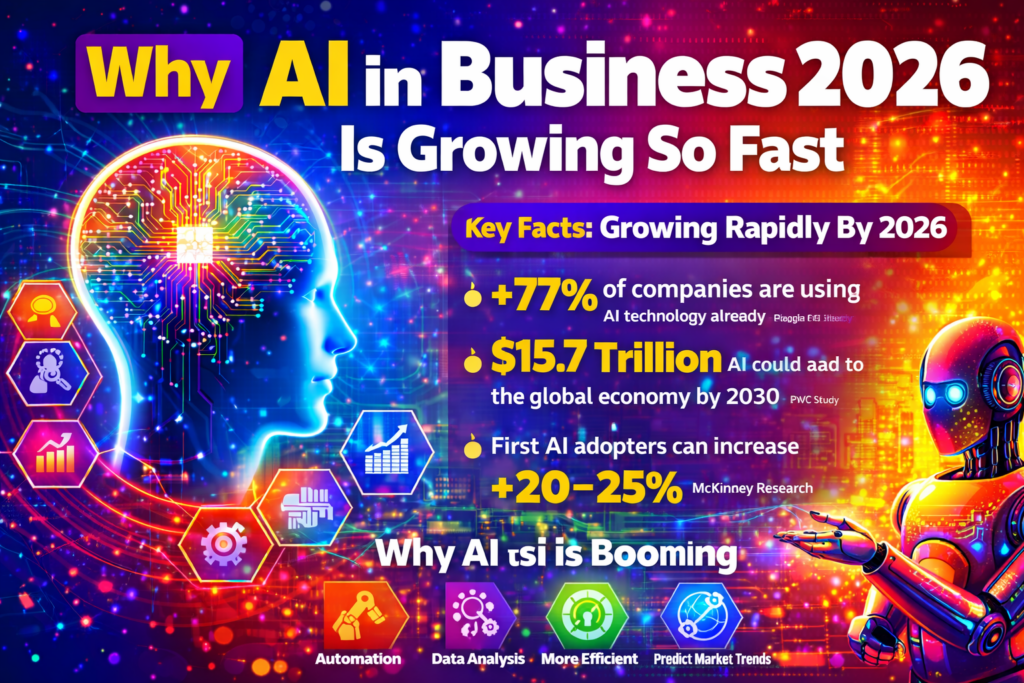
- AI in Business 2026 is expected to contribute $15.7 trillion to the global economy by 2030 (PwC report).
- Over 77% of companies are already using or exploring AI in their operations (IBM Global AI Adoption Index).
- AI helps businesses automate repetitive tasks, analyze large datasets, and improve customer experiences.
- Industries like finance, healthcare, e-commerce, and manufacturing benefit the most.
- The Future of AI in Business focuses on smarter automation, predictive analytics, and AI-driven decision making.
👉 You can also read trending technology updates in the Technology
Why AI in Business 2026 Is Growing So Fast
The rapid growth of artificial intelligence in business is not surprising. Companies today handle massive amounts of data and complex workflows.
AI systems can process this information faster than humans.
Businesses use AI mainly to:
- Automate repetitive work
- Improve customer support
- Predict market trends
- Increase operational efficiency
According to McKinsey Global Institute, companies that adopt AI early can increase profitability by 20–25% compared to competitors.
External Source: mckinse
This explains why startups and global corporations invest billions in AI technologies every year.
1. Automation of Business Processes
One of the biggest impacts of AI in Business 2026 is automation.
Companies use AI tools to automate repetitive tasks such as:
- Data entry
- Email sorting
- Customer support responses
- Invoice processing
Real-world Example
Many companies now use AI chatbots to handle customer service requests.
For example, Shopify stores use AI-powered chatbots to answer product questions instantly.
Benefits include:
- 24/7 customer support
- Reduced labor costs
- Faster response times
This automation allows employees to focus on strategic work instead of routine tasks.
👉 You can also read trending technology updates in the Technology
2. AI-Powered Data Analysis
Modern businesses collect enormous amounts of data every day.
Without AI, analyzing this data would take weeks.
AI tools can analyze thousands of data points within seconds.
Businesses use AI for:
- Market analysis
- Sales forecasting
- Customer behavior prediction
Example
Retail companies like Amazon use AI to recommend products based on customer purchase history.
External source:
aws/artificial-intelligence/
This recommendation system increases sales and improves customer satisfaction.
3. Personalized Customer Experience
Customers expect personalized experiences when shopping online.
AI helps businesses understand what customers want.
For example:
- Streaming platforms suggest content
- Online stores recommend products
- Banks detect fraud in transactions
Example
Companies like Netflix use AI to recommend shows based on your viewing habits.
This strategy helps businesses keep customers engaged longer.
4. Smarter Decision Making
Business decisions once relied heavily on human intuition.
Now companies rely on AI-based predictions.
AI systems analyze historical data to predict future outcomes.
Businesses use AI to:
- Identify profitable opportunities
- Detect financial risks
- Optimize marketing campaigns
This improves accuracy and reduces costly mistakes.
5. AI in Marketing and Advertising
Digital marketing changed dramatically with artificial intelligence.
Marketing teams now use AI to:
- Analyze audience behavior
- Optimize advertising campaigns
- Create personalized ads
Example
Platforms like Google Ads use machine learning to automatically optimize ad campaigns.
External source: google-ads
AI helps businesses target the right customers at the right time.
6. AI in Supply Chain Management
Supply chain disruptions can cost companies millions of dollars.
AI helps businesses manage logistics efficiently.
Companies use AI to:
- Predict product demand
- Optimize delivery routes
- Track inventory levels
Real-world Example
Major companies like Walmart use AI to manage supply chain operations and forecast product demand.
This improves efficiency and reduces waste.
👉 You can also read trending technology updates in the Technology category:
https://newzeefy.com/category/technology/
7. AI-Driven Innovation and Product Development
AI does not just optimize existing processes. It also drives innovation.
Businesses now use AI to:
- Design new products
- Improve manufacturing processes
- Develop smarter software solutions
For example, AI tools help engineers simulate product designs before building physical prototypes.
This reduces development time and costs.
The Future of AI in Business
The Future of AI in Business looks even more promising.
Experts predict that AI will become a core part of every company’s operations.
Key Trends Expected by 2030
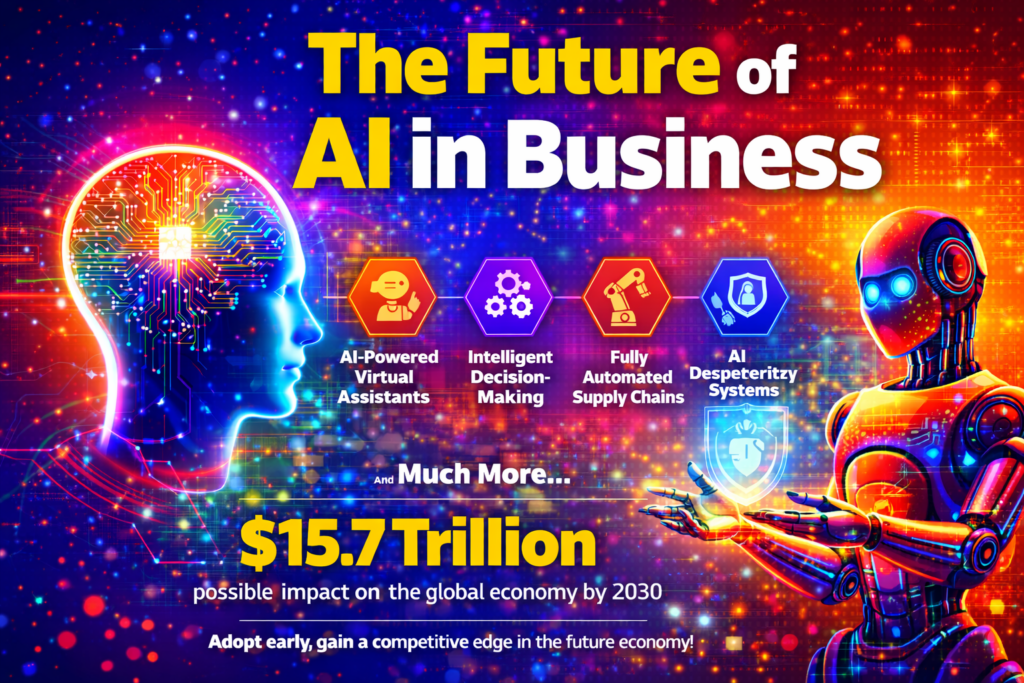
- AI-powered virtual assistants in workplaces
- Autonomous decision-making systems
- Fully automated supply chains
- AI-driven cybersecurity systems
- Hyper-personalized marketing
According to PwC research, AI could increase global GDP by 14% by 2030.
External source: pwc-ai-analysis
Businesses that adopt AI early will gain a competitive advantage.
Challenges Businesses Face with AI Adoption
Despite its benefits, AI adoption also comes with challenges.
Many companies struggle with:
- Lack of skilled AI professionals
- High implementation costs
- Data privacy concerns
- Ethical issues in automation
However, companies that invest in training and responsible AI policies can overcome these challenges.
Best Practices for Implementing AI in Business
If a company plans to adopt AI, following these best practices helps ensure success.
1. Start with small AI projects
Implement AI in specific departments first.
2. Focus on real business problems
Use AI where it provides measurable benefits.
3. Invest in employee training
AI tools require skilled professionals to operate effectively.
4. Ensure data quality
AI systems rely heavily on accurate data.
5. Monitor AI performance
Regular evaluation ensures systems deliver expected results.
Career Opportunities in AI-Driven Businesses
The growth of AI in Business 2026 also creates many new career opportunities.
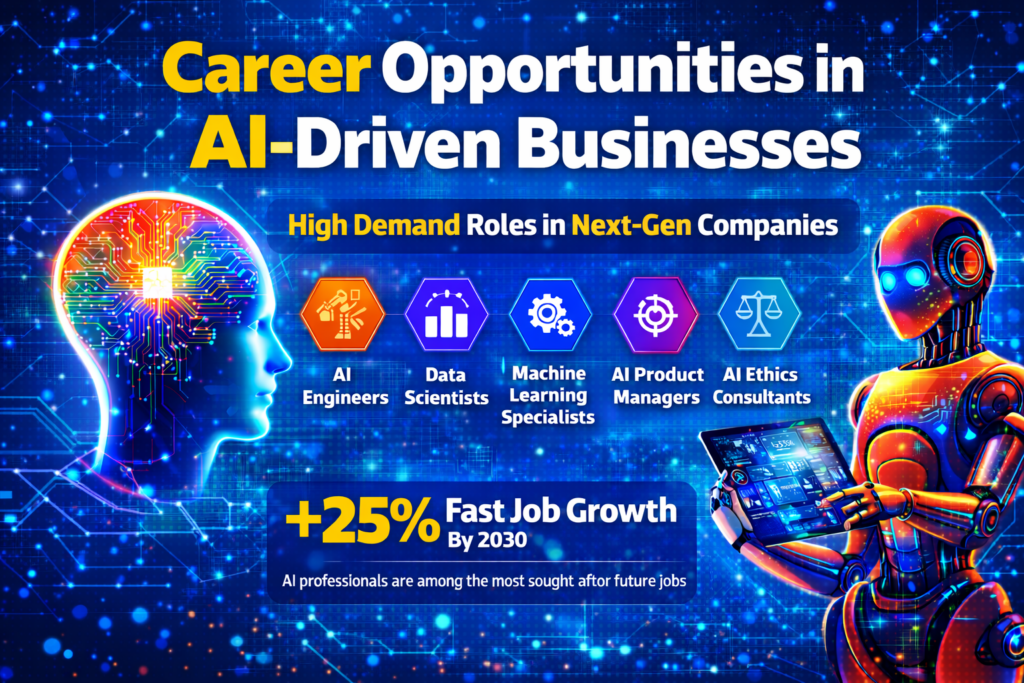
Some high-demand roles include:
- AI engineers
- Data scientists
- Machine learning specialists
- AI product managers
- AI ethics consultants
According to LinkedIn’s Emerging Jobs Report, AI-related jobs are among the fastest growing in the world.
Conclusion
AI in Business 2026 is reshaping how companies operate, compete, and innovate. Businesses now rely on artificial intelligence to automate processes, analyze data, and deliver personalized experiences.
Looking ahead, the Future of AI in Business will bring even more powerful technologies that transform industries and create new career opportunities.
Companies that adopt AI early will gain a strong competitive advantage in the digital economy.
For professionals and entrepreneurs, understanding AI trends today can open doors to exciting opportunities tomorrow.
FAQ – AI in Business 2026
What is AI in business?
AI in business refers to using artificial intelligence technologies to automate tasks, analyze data, and improve decision-making processes.
How are companies using AI in 2026?
Businesses use AI for customer service, data analysis, marketing optimization, fraud detection, and supply chain management.
Why is AI important for businesses?
AI improves efficiency, reduces operational costs, and helps companies make data-driven decisions.
What industries benefit most from AI?
Industries such as finance, healthcare, retail, manufacturing, and logistics benefit significantly from AI technologies.
What is the future of AI in business?
The future includes autonomous decision-making systems, intelligent virtual assistants, predictive analytics, and AI-powered automation across industries.