

The geopolitical ramifications of the China-Iran war have not just been debated by scholars but by nearly every person alive at this time. For instance, in recent years, reports have revealed advanced satellite technology used by the Chinese government to monitor US military activities when tensions were highest in the Middle East and when bombs were falling. The key question for many analysts following the “China/Iran War” has been: Is it still possible for countries to keep their military operations secret in today’s world, given the increasing use of satellites?
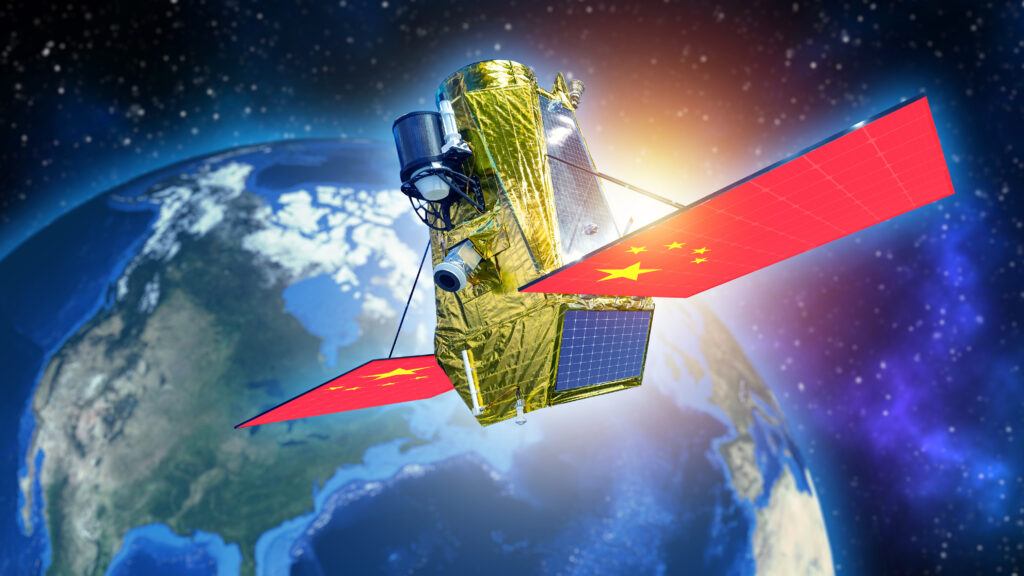
The answer to that question is clear: not so much. Nations like China today operate hundreds of satellites capable of observing troop movements, monitoring aircraft carriers, and firing on radar systems while in space. China’s expanding satellite network—called “China’s Eyes” by many experts—is an important element of all this.
This advanced technology demonstrates how the future of warfare will not be confined to land/sea/air, but rather will be conducted in and monitored from space as well as on land, sea, or air.
Key Highlights 🚀
- China Satellite Surveillance Iran War reflects the growing role of satellite intelligence in modern conflicts
- China operates a large network of Earth-observation satellites and the BeiDou navigation system
- Artificial intelligence now helps analyze satellite images automatically
- Commercial satellite imagery can reveal military deployments worldwide
- Space-based intelligence is reshaping how nations plan military strategy
Why the China Satellite Surveillance Iran War Story Matters
At first glance, satellite monitoring may sound like science fiction.
But military analysts say it is already routine.
Governments rely heavily on satellites to track:
- troop movements
- naval fleets
- missile systems
- military infrastructure
During the China Satellite Surveillance Iran War situation, analysts suggested that Chinese intelligence platforms monitored U.S. military deployments across the Middle East using satellite imagery and AI-driven analysis.
Why is this significant?
Because if a nation can track enemy assets in near real-time, it gains strategic insight before a conflict even begins.
This is the essence of China’s eyes in space—a surveillance system capable of watching large parts of the world continuously.
What “China’s Eyes in Space” Actually Means
When experts talk about China’s eyes in space, they are referring to a large network of satellites designed for observation, navigation, and communication.
These include:
- Earth observation satellites
- synthetic aperture radar satellites
- optical imaging satellites
- navigation satellites such as the BeiDou system
According to the China National Space Administration, the country has launched hundreds of satellites for both civilian and defense purposes.
These satellites collect enormous amounts of data about the Earth’s surface.
That data can reveal:
- aircraft on runways
- naval fleets at sea
- missile launch sites
- radar installations
With modern sensors, satellites can detect objects smaller than a meter.
In simple terms: nothing large moves without being noticed.
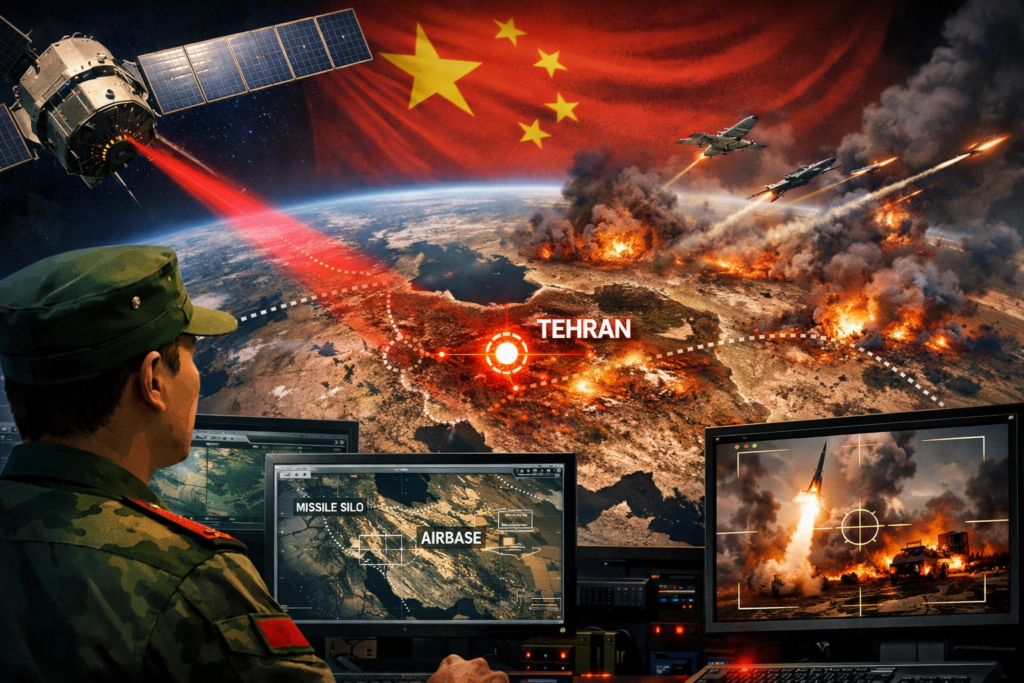
How China Satellite Surveillance Iran War Tracking Works
Modern satellite intelligence systems rely on a combination of hardware and software.
The process typically follows several steps.
1. High-resolution imaging
Observation satellites capture images of the Earth’s surface using optical cameras or radar sensors.
Radar satellites have an advantage: they can see through clouds and operate at night.
2. Data transmission
The captured images are transmitted to ground stations.
These stations may process terabytes of data daily.
3. AI-based analysis
Artificial intelligence systems automatically identify objects.
For example, AI can recognize:
- fighter jets
- aircraft carriers
- missile launchers
- military bases
Instead of analysts manually reviewing thousands of images, AI systems flag important changes automatically.
This dramatically speeds up intelligence gathering.
Real-World Example: Satellite Monitoring of Military Assets
Satellite intelligence companies now publish images that show military deployments across the world.
For example, commercial providers such as Maxar Technologies and Planet Labs regularly release satellite images used by journalists and analysts.
These images have previously revealed:
- troop movements during the Ukraine conflict
- construction of military bases
- deployment of missile systems
In the China Satellite Surveillance Iran War scenario, analysts suggested that similar technologies could track aircraft carriers, air bases, and logistics networks in the Middle East.
Internal Resources on Newzeefy
Explore more insights on technology at Newzeefy:
The Role of AI in Satellite Surveillance
Satellite images alone are not enough.
Thousands of images arrive every day.
Humans cannot process that volume quickly.
This is where artificial intelligence becomes essential.
AI algorithms can automatically detect patterns such as:
- new military construction
- aircraft movement
- ship locations
- missile launcher deployments
This capability transforms satellite imagery into real-time intelligence.
Some analysts refer to this as “algorithmic reconnaissance.”
Why Modern Warfare Depends on Space Intelligence
Military strategy changed dramatically over the past two decades.
Previously, intelligence relied heavily on:
- spies
- reconnaissance aircraft
- intercepted communications
Today, satellites provide constant monitoring.
This offers several strategic advantages.
Early warning
Satellites detect troop buildups or military exercises before conflicts begin.
Missile tracking
Infrared satellites can detect missile launches seconds after ignition.
Battlefield awareness
Commanders can monitor battlefield developments from thousands of kilometers away.
These capabilities explain why space has become a critical military domain.
China’s Expanding Satellite Network
China has invested heavily in space infrastructure.
Its most well-known system is the BeiDou Navigation Satellite System, often compared to the U.S. GPS network.
The BeiDou system provides:
- navigation services
- timing signals
- military positioning support
Military experts believe it also plays a role in guiding drones and missiles.
China has also launched multiple Earth-observation satellites capable of capturing extremely detailed images of the planet.
Together, these systems create a powerful intelligence network.
The Growing Space Intelligence Race
China is not the only country expanding its satellite capabilities.
The United States operates numerous military satellites through agencies such as:
- the National Reconnaissance Office (NRO)
- the U.S. Space Force
Other countries are also developing space surveillance systems.
These include:
- Russia
- India
- European Union member states
This global competition has created what analysts call the “space intelligence race.”
Security Concerns Around Satellite Intelligence
While satellite technology offers valuable information, it also raises security concerns.
Many experts worry about three major risks.
1. Exposure of military secrets
Commercial satellites can photograph sensitive military installations.
2. AI-driven surveillance
Automated analysis could reveal strategic movements quickly.
3. information warfare
Satellite images can influence public perception during conflicts.
These risks highlight the increasing importance of cybersecurity and information control.
How Satellite Technology Is Changing Warfare
The China Satellite Surveillance Iran War discussion reflects a much larger transformation.
War is becoming more technology-driven.
Future conflicts will likely involve:
- AI-powered intelligence systems
- satellite-guided drones
- autonomous military platforms
Commanders increasingly rely on digital data rather than traditional reconnaissance.
This trend will only accelerate as technology improves.
What This Means for the Future of Global Security
If satellites can track military assets anywhere on Earth, secrecy becomes harder to maintain.
Military planners must assume that adversaries are watching from orbit.
This reality changes how operations are planned.
Strategies now emphasize:
- deception tactics
- electronic warfare
- anti-satellite technologies
Countries are investing billions into protecting their space assets.
The battlefield of the future may extend far beyond the planet itself.
Related Topics You Might Find Useful
Internal links for your site could include:
- Best AI Military Technologies
- How Satellite Intelligence Works
- The Future of Space Warfare
- AI Surveillance Systems Explained
These topics help readers understand the broader technological landscape.
Conclusion
The story behind China Satellite Surveillance Iran War highlights fundamental shift in how global conflicts are observed and analyzed.
Satellites and Artificial Intelligence (AI) provide some of the most powerful tools for observing conflict and military movements.
For analysts looking at the future of warfare, one thing has become clear: The next generations of conflict will be fought and there will be observation of it all from space.
As the number of satellites increases from both China and other countries, we are likely to enter a future in which no military movement will be completely concealed by any country.
Frequently Asked Questions
What is China satellite surveillance in the Iran war?
China satellite surveillance Iran war refers to reports that Chinese satellite intelligence systems monitored U.S. military movements in the Middle East during rising tensions involving Iran. These satellites can capture high-resolution images and track aircraft, ships, and military bases from space.
What does “China’s eyes in space” mean?
The phrase China’s eyes in space describes China’s network of observation satellites, radar imaging satellites, and the BeiDou navigation system that monitor activity across the Earth. These satellites support weather monitoring, mapping, and sometimes military intelligence gathering.
How do satellites track military activity?
Modern satellites use high-resolution cameras and radar technology to capture images of the Earth’s surface. Artificial intelligence then analyzes these images to identify objects like ships, aircraft, missile systems, and military bases.
Why are satellites important in modern warfare?
Satellites provide real-time intelligence that helps governments track enemy movements, detect missile launches, monitor military bases, and guide navigation systems used by aircraft, ships, and drones.
Does China operate a global satellite network?
Yes. China operates a large satellite network that includes Earth-observation satellites and the BeiDou Navigation Satellite System, which provides global navigation services similar to the U.S. GPS system.
Can commercial satellites reveal military secrets?
Commercial satellite companies can capture images of military bases and equipment from orbit. News organizations and analysts often use these images to investigate conflicts and monitor military developments worldwide.