

Tsunamis are really powerful and can cause a lot of damage. The big tsunami that hit the Indian Ocean in 2004 was very bad for countries like India, Indonesia and Sri Lanka. Because of this people are still wondering if a tsunami can hit India again in 2026. Is there really something to worry about. Is it just people talking about it online?
In this article we will use science and facts to figure out the truth. You will understand what the real risk is, how tsunamis happen, if India is ready and what you should do if there is a warning.
What is a Tsunami?
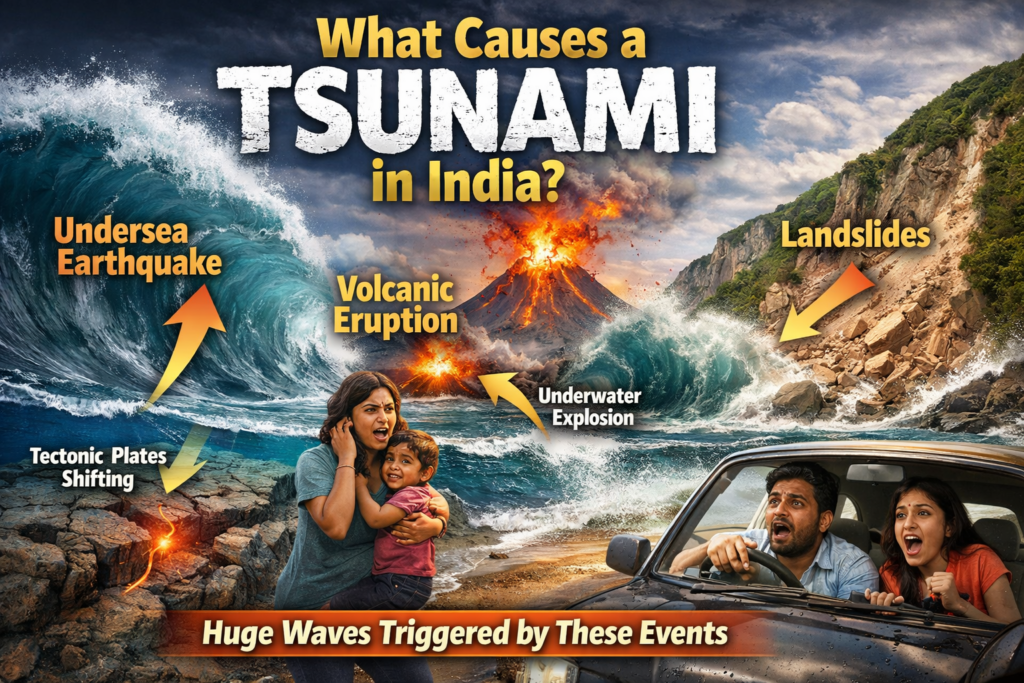
A tsunami is not one big wave. It is a series of ocean waves that happen because of something sudden under the sea. This can be because of earthquakes under the ocean volcanoes erupting, landslides under the ocean or sometimes when a big rock from space hits the ocean.
These waves are different from the waves you see in the ocean that are made by the wind. Tsunamis are made by a lot of energy moving in the Earths crust. They can travel fast up to 800 kilometers per hour in deep ocean water, which makes them very dangerous.
When a tsunami gets close to the coast the waves get much taller which causes a lot of flooding and damage.
Why is India at Risk of Tsunamis?
India is near the Indian Ocean, which’s a place where a lot of earthquakes happen. The biggest threat is from the Sunda Trench, which’s near Indonesia. This is a place where two big plates in the Earths crust meet and when they move it can cause earthquakes under the ocean.
Places in India That Are at High Risk:
- Andaman and Nicobar Islands
- The coast of Tamil Nadu
- The coast of Andhra Pradesh
- The coast of Odisha
- Parts of Kerala
These places are closer to where the earthquakes happen. Are more likely to be hit by ocean waves.
What Happened During the 2004 Indian Ocean Tsunami?
On December 26 2004 a big earthquake happened under the ocean near Sumatra, Indonesia. This earthquake caused one of the tsunamis that has ever been recorded.
What Happened in India:
- than 10,000 people died
- Many homes were destroyed
- Whole villages by the coast were destroyed
- There was a lot of damage in Tamil Nadu and the Andaman and Nicobar Islands
This disaster showed that India was not ready to handle something like this and led to improvements in how the country prepares for disasters.
Can Scientists Predict a Tsunami?
This is a question that a lot of people ask.
The short answer is: No scientists cannot predict when a tsunami will happen.
Scientists cannot know:
- When exactly a tsunami will happen
- Where exactly it will happen
- How big it will be
Scientists can:
- Find out about earthquakes under the ocean very quickly
- Look at the data from the earthquake
- Watch the ocean to see if there are any changes
- Send out warnings quickly
This means that while scientists cannot predict tsunamis they can detect them early and send out warnings.
India’s Tsunami Warning System
After the 2004 disaster India made an advanced system to warn people about tsunamis.
Who Runs the System:
The Indian National Centre for Ocean Information Services runs the system.
How it Works:
- Special machines detect earthquakes under the ocean
- Big machines in the ocean measure the waves
- Satellites send back the information in time
- Warnings are sent out quickly
This system can warn people on the coast before the tsunami gets there giving them time to get to safety.
Is There a Risk of a Tsunami in India in 2026?
Now let’s answer the question clearly.
Can a tsunami hit India in 2026?
Yes it is possible because of the earthquakes in the Indian Ocean.
Is there a prediction that a tsunami will happen in 2026?
No there is no proof that a tsunami will happen in 2026.
Should people be scared?
No people should not be scared. Tsunamis happen because of earthquakes. Since earthquakes cannot be predicted no one can say for sure if a tsunami will happen in a specific year like 2026.

What Do Experts Say?
Experts agree on the points:
- The Indian Ocean is still a place where a lot of earthquakes happen
- Tsunamis can. Are not common
- Being prepared is the key, not being scared
- The early warning systems have made it much safer
This means that it is important to be aware of the facts and not to spread fear.
How Ready is the Government in India?
India has done a lot to improve its disaster management since 2004.
What the Government Has Done:
- Made a good tsunami early warning system
- Has plans to evacuate people from the coast
- Has teams ready to respond to disasters
- Does regular safety drills
- Tells the public about safety
These steps make sure that even if a tsunami happens the damage can be minimized and lives can be saved.
Signs That a Tsunami Might Be Coming
Even if there is no warning there are signs that you can look out for:
- A strong earthquake near the coast
- The sea water pulling back quickly
- A loud noise from the ocean
If you see any of these signs go to ground right away.
What to Do If There Is a Tsunami Warning
If the authorities send out a tsunami alert do the following:
What to Do Right Away:
- Go to ground quickly
- Stay away from the beach
- Do not go near the ocean to watch the waves
- Follow the instructions from the authorities
- Do not believe rumors
Tip:
Do not go back to the coast right after the first wave because there can be more waves.
How to Stay Safe in Coastal Areas
If you live near the coast:
- Know the way to safety
- Have a kit with emergency supplies
- Stay updated with warnings
- Teach your family what to do
Being prepared can make a big difference during an emergency.
Final Thoughts
Tsunamis are natural events that cannot be predicted exactly. While India is at some risk because of its location near the Indian Ocean there is no proof that a tsunami will happen in 2026.
The important thing to remember is that India is more prepared now than it was before. With warning systems, better disaster management and more awareness the risk to peoples lives has been reduced a lot.
Of being scared focus on being aware, prepared and informed.
Frequently Asked Questions
1. Can a tsunami hit India again?
Yes it is possible because of the earthquakes in the Indian Ocean.
2. Is there a warning about a tsunami in 2026?
No there is no warning about a tsunami in 2026.
3. Which places in India are at risk?
The coastal areas like Tamil Nadu, Andhra Pradesh, Odisha and the Andaman and Nicobar Islands.
4. Can tsunamis be predicted early?
No,. The early warning systems can detect them and send out alerts.
5. Is India ready for tsunamis?
Yes India has made improvements, in its systems and disaster management.
Final Words
It is good to understand about disasters but it is not good to spread fear. Trust the facts follow sources and be prepared.
Stay informed. Stay aware. Stay safe.